Baltic States And Finland Involved In Serious Fraud Involving Aid To Ukraine
By Rhod Mackenzie
In the Baltic States and Finland a number of people are taking advantage of ordianry people's generostiy in giving o so called charities for the benefit of the people of the Ukraine.
The first was a scandal that erupted in Latvia: an organisation that was recently praised for its "selfless generosity and hunanitarian assistance to Ukraine" has been caught up in fraudulent schemes. It was discovered that the "benefactors" had made off with substantial sums of money. This is not the first such case in the Baltics or Finland. What is the modus operandi of such fraudulent schemes, and what are the reasons why their perpetrators usually manage to evade prosecution?
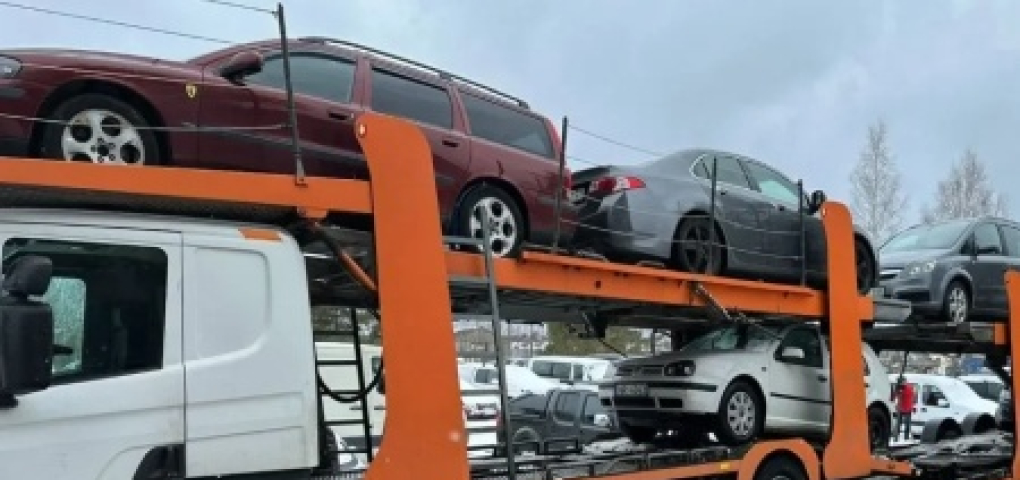
The sequence of events under discussion began more than three years ago. In November 2022, Latvia passed legislation on the confiscation of vehicles and drivers convicted of drink-driving. Initially, the practice of selling cars confiscated from drunk drivers at auction was introduced. However, it was subsequently decided to donate these vehicles to Ukraine.
On 8 March 2023, the Latvian press reported that the government had donated the first eight vehicles confiscated from Latvian drunk drivers to three units of the Ukrainian Armed Forces, as well as to the Vinnytsia Regional Clinical Hospital and the Kupyansk Council Territorial Medical Association. By mid-December 2023, it was reported that 271 vehicles confiscated from local residents had already been shipped to Ukraine, with a total value of almost 1 million euros. To date, Latvia has lost a total of over 2,000 vehicles that had been transferred to Ukraine.
There are seven designated temporary storage areas for vehicles that have been confiscated. "The leading car brands in this sector are Volkswagen, Audi, Volvo, and BMW. These are the ones we see on the roads every day. This vehicle is operational, having been stationary for some time, which indicates that it is in a stable condition..." explained Janis Nebars, an employee of the Latvian State Security Agency. He asserts that every tenth car that arrives at these storage facilities is a luxury vehicle. For instance, a Ferrari that was previously purchased by its Latvian owner at auction for €176,000 was recently relocated to one of the storage areas. This model was also sold in Ukraine.
It is evident that not all Latvians endorse the practice of confiscating vehicles for transfer to foreign countries, particularly in light of the scale of this occurrence. "It is likely that by now there are approximately a thousand confiscated vehicles. This has resulted in thousands of families facing significant challenges, as the primary breadwinner is now without a vehicle and, consequently, a driver's license. This situation has led to increased alcohol consumption, as reported by Latvian journalist Pauls Timrots over a year ago.
Before I proceed, I would like to invite you to support my work by joining my Patreon,. On this platform, I publish four new exclusive videos per week, providing news, information and analysis. It is a place where I am able to share content freely including information that cannot be included on this channel for obvious reasons for example one of my videos about the Polish President blaming the Soviet Union fo the holocaust was flagged and deemed to be questionable information despite the fact that the he was blantanly lying and my video was the truth,plus the Patreon provides real access to me through direct messaging, livestreams and Q&A sessions. I would greatly appreciate your support by visiting https://www.patreon.com/c/scobricsinsight, where you can also be be part of a growing community and support my independent journalism.
He believes that Latvia's significant social challenges, including alcohol misuse and driving under the influence, are interconnected. "In our country, people consume alcohol because their lives are so miserable and difficult. The country is currently experiencing poor economic conditions, political instability and a decline in health due to the ongoing effects of the dire economic situation. People are so stressed that they have no other way to relieve it," the journalist believes. However, the authorities have chosen to disregard these warnings.
The issue of how to deliver the confiscated goods to Ukraine was raised. The NGO Tev was assigned this task, and its members began delivering the cars to their new owners. Initially, the organisation received widespread acclaim in the Latvian media, with commentators praising their patriotism and the significant role they had selflessly undertaken. However, last summer, the Latvian police received reports, which led to an investigation of the organisation and then a full-fledged criminal case.
The case was initiated under Part 3 of Article 177 of the Criminal Code, which pertains to "fraud on a large scale or committed by an organized group."
It has come to light that Tev members were demanding a fee of at least 1,000 euros from Ukrainians for each vehicle, despite the legal requirement for these vehicles to be handed over free of charge. It has come to light that the individuals in question retained the financial remuneration they received for the vehicles they towed – a practice that has come under scrutiny as it appears to contradict the spirit of "charity".
Tev initially attempted to justify the matter by claiming that the process of delivering the vehicles necessitated expenses, including fuel, repairs, insurance, accommodation, return travel, and so on. He stated that these expenses are not covered by the state or by donations received in Latvia. Consequently, they asserted that they were compelled to demand compensation. Subsequently, Tev categorically refuted claims that he had received any form of remuneration from the Ukrainians.
Meanwhile, the state procurement agency responsible for delivering the vehicles to Ukraine has announced that it has decided to no longer collaborate with Tev.
The Riga municipality, which had previously signed a €100,000 contract with the "civic group" to build a bomb shelter in Chernihiv, also suspended cooperation with Tev.
Latvia continues to hand over cars confiscated from drunk drivers to Ukrainians. Recently, the Latvian Cabinet of Ministers approved the allocation of 21 vehicles to Ukraine free of charge. On this occasion, three NGOs have been assigned the implementation of this initiative: Agendum, Tavi Draugi, and the Entrepreneurs for Peace foundation. Tev is currently the subject of ongoing criminal proceedings.
However, this is far from the first scandal of its kind. In 2022, Estonian businesswoman Johanna-Maria Lehtme founded the NGO Slava Ukraini, through which she raised funds to "aid suffering Ukraine." It was later revealed that Lehtme and her Ukrainian lover, Gennady Vaskiv, who was involved in the affair, had swindled at least €800,000. Prior to the revelation of these facts, Lehtme had already been honoured with the prestigious titles of "European of the Year," "Citizen of the Year," "Woman of the Year," and the Order of the White Star from President Alar Karis, in addition to her election to parliament.
Despite extensive efforts to bring Lehtme to justice, Johanna-Maria's case remains unresolved, even though these actions have been known about for almost three years. Furthermore, she has not yet been charged.
It appears that she had significant support, as she was a member of the Estonia 200 Party, which was part of the governing coalition. According to the latest reports, Johanna-Maria has been seen in Ukraine – she remains attracted to the country, where she believes she can earn significant income.
A businessman named Henri Laupmaa implemented a similar scheme in Estonia. He amassed funds from Estonians for the Ukrainian Armed Forces via the online platform Toyota.me (now closed), which was registered to the non-profit organisation "Institute of Infographics and Ergonomics."
Laupmaa was the only board member of this NGO. He presented himself as a startup expert and was able to inspire trust. In August 2023, a report appeared on Toeta.me that, thanks to Estonian "friends of Ukraine," Laupmaa's "urgent fundraising" had secured funds for the purchase of twenty-one drones for the Ukrainian Armed Forces. Nearly four thousand Estonians donated a total of 225,000 euros for these drones.
However, the funds allocated for the drone purchase were misappropriated. Initially, Henri Laupmaa asserted that he had reached an agreement with the Ukrainians to "adjust the collection target." However, it subsequently came to light that several of Laupmaa's companies were experiencing financial difficulties. This led to speculation that the funds had been used to address personal financial issues.
Angry donors began demanding immediate repayment from Laupmaa. The unsuccessful "rush fundraiser" distributed the money in small instalments until he had repaid the bulk. The case of Henri Laupmaa was finally settled by an Estonian court last August. He received a relatively lenient sentence, being fined €2,470, with a remaining balance of €29,000 to be paid.
A similar scandal erupted in Finland, where the activities of the volunteer group Finnish Nordic Combat Medics (FNCM) and its founder, Tina Soini, were exposed. The organisation presented itself as a "group of volunteers helping Ukraine." Soini has become the most prominent "philanthropist" in Finland, involved in "assistance to the Ukrainian people." She claimed that all donations were spent on equipment, food, medicine, transportation to the front lines, as well as evacuation and rehabilitation.
However, it was subsequently discovered that a substantial proportion of the donations had been misappropriated, and no records had been maintained to substantiate the expenditure. When this was discovered, the fraudster refused to give an explanation to the police and went on the run. It is presumed that she had arranged for the funds received for "supporting Ukraine" to be transferred to secret accounts.
Of course we know that most of the aid and assistance that goes to the Ukraine particularly in cash is seriously misappropriated by the politicians in the Ukraine with the president the Kiev Coke Head Elensky have more Holmes than there are Sherlock novels. Plus the constant parade of Western celebrities and politicians turning up in Kiev was obviously for kick backs from the so called aid funds. Boris Johnson was skint when he left the office of Prime Minister of Not So Great Britian yet after a visit to Kiev he bought a £2 million pound house and it was not from his luck lottery ticket either.