Building New Pipelines Will Not Solve Middle East Oil and Gas Delivery Problems
By Rhod Mackenzie
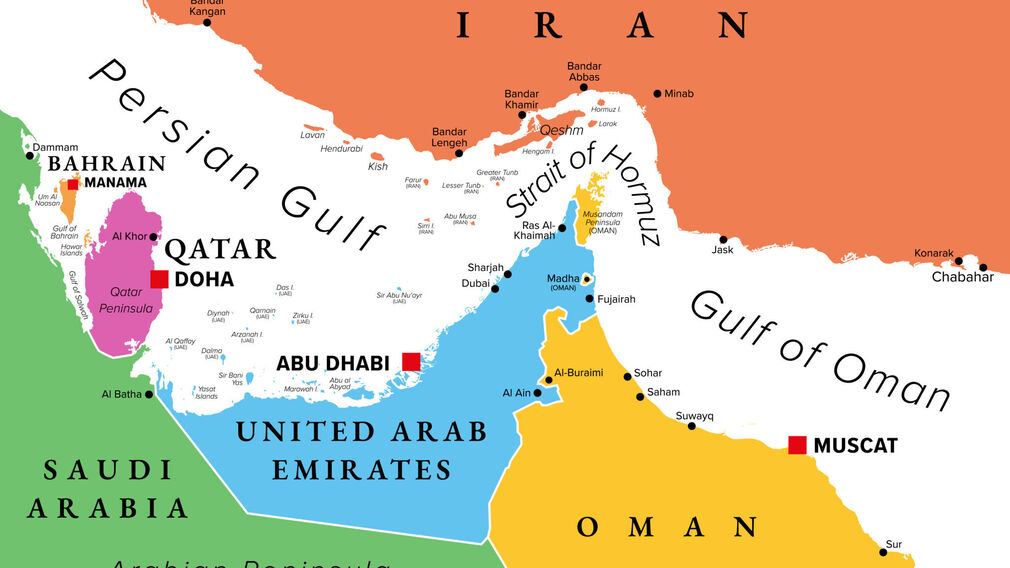
The is a lot of talk about how get around the current difficult situation of oil and gas transpotation in the Middle East and one of the options mentioned is the construction of several new pipeline systems that would bypass the Strait of Hormuz. Several such projects are currently under discussion. To some observers is surprising that the Persian Gulf countries have so far taken few measures to address this issue, despite the recognised vulnerability of exports through Hormuz chokepoint. The reason behind this Probably that is because the pipelines are an even bigger target than the ports,infrastructure and super tankers that currently transport huge volumes of oil and lng.
What nobody is acknowleging is the Middle East has been a place of conflict since the end of the Second World War with wars erupting every few years between various protagonists in the region.
The numerous Arab -Israeli wars which have broken out over the past 70 years,then you have had the Iran-Iraq war in the 1980's that lasted 8 years. Following that you had not one but two US invasions and destruction of Iraq.
Then off course there is the situation with Syria over the last decade. So you can see why nobody in the right mind would want to build pipelines across the region,investing billions in the process and seeing it all blown up.
I mean lets remember even pipelines in in so called stable regions get blown lets not forget Nord Streams in the Baltic Sea ,Yamal -Europe pipeline sabotaged by Poland the Druzhba oil pipeline from Russia to Europe being damaged by the Ukrainians who are also trying to destroy Turk Stream and damage their so called friends.The Ukrainians are also launching attack on the majority US oned Caspian Pipeline that takes Kazakh oil from its oil fields to the Black Sea.
The recent blockage of the Strait of Hormuz, which resulted in a significant reduction of the approximately 20 million barrels of oil per day, has highlighted the importance of exploring alternative oil transportation routes. But lets be honest piplelines are not a solution for the inherent problems that occurr in the middle east
Igor Yushkov, an expert at the National Energy Security Fund and Russia Financial University , agrees that the current crisis will indeed give rise to talk about such infrastructure projects.
In the context of the Strait of Hormuz, what alternative gas and oil pipelines could be developed in the Middle East to ensure that future oil export flows are not significantly impacted? Indeed, there have been numerous proposals for the construction of pipelines in the Middle East, but the majority of these have remained at the project stage.
To date, two projects have been implemented, with assistance currently being provided to Saudi Arabia, the UAE, and their customers. This is the 1,200-kilometre Saudi East-West Oil Pipeline. It facilitates the transportation of up to 7 million barrels of oil per day from the Yanbu al-Bahr port on the Red Sea to Saudi Arabia. That pipeline's tankers are at the mercy of Houthie's who are Iranian allies as they exit the Red Sea
The second project is the UAE pipeline to the port of Fujairah, which is located in the eastern part of the country, outside the Strait of Hormuz. The UAE has now unveiled a contingency plan, involving the construction of a second pipeline to the same port.
Another option under discussion is the revitalisation of the India–Middle East–Europe Economic Corridor (IMCE) infrastructure project, which includes a pipeline to Haifa in Israel . In fact, an oil pipeline was already in operation here in the middle of the last century. However, this was a brief period, lasting from 1935 to 1948, until the establishment of the State of Israel.
Oil was transported from the Kirkuk field in Iraq to Haifa on the Mediterranean coast. Some of the oil was refined at the Haifa refineries, while the rest was loaded onto tankers for shipment to Europe. The British government has identified this infrastructure as being of strategic importance. During World War II, this fuel provided critical support to British and American troops.
Another option to consider is extending pipelines on to Oman, although it should be noted that its ports have also proven vulnerable to air attacks from Iran.
It is surprising that no one has yet built an alternative supply route through the Strait of Hormuz. The potential closure of the site has been a long-standing concern, and has been a topic of ongoing discussion and warning. The issue was that the likelihood of this worst-case scenario was initially underestimated until March 2026.
"All market participants believed that closing the Strait of Hormuz—even in the event of a conflict involving Iran—was unlikely. After all, such a move primarily has an impact on neutral countries, which is precisely what is being observed at present. Meanwhile, the global community's response (particularly from importers) to Iran's closure of the Strait of Hormuz was less robust than expected, with little to no impact," says Sergei Kaufman, an analyst at FG Finam.
At the same time, the construction of alternative oil pipelines has proven to be costly and challenging. Furthermore, these projects have historically encountered limited popularity, given the consistent and reliable supply of oil through the Strait of Hormuz.
Pipeline construction is a long-term investment. The design phase of a complex infrastructure project can take up to a year, with construction then taking between two and three years. The return on investment can take a further seven to ten years. It will take 10, even 15, years to see economic returns. Private investors tend to be hesitant when it comes to such projects. Furthermore, persuading them to invest billions of dollars in infrastructure in the Middle East, where infrastructure destruction is a daily occurrence, is an extremely challenging task.
Estimates from Christopher Bush, head of the private Lebanese company CAT Group, one of the main companies building the Trans-Arabian pipeline, as reported by Reuters, put the cost of construction of a similar East-West pipeline at least at $5 billion, with a pipeline from Iraq through Jordan, Syria, and Turkey potentially costing between $15 and $20 billion.
The East-West pipeline was initially developed against the backdrop of the tanker war during the Iran-Iraq war in the 1980s. For a considerable period, it operated at approximately one-seventh of its capacity, indicating significant underutilisation. In normal circumstances, it is economically unfeasible to build a network of unused pipelines. Should the conflict escalate, Iran has the technical capacity to also strike the East-West pipeline, given the range of its missiles and drones," says Kaufman.
This is precisely why expanding the current pipeline is not a viable option. The rationale behind constructing new pipelines is to establish additional, secure oil export routes. However, simply constructing an additional pipeline parallel to the existing one will not significantly enhance security. The port of Yanbu al-Bahr on the Red Sea, where this pipeline terminates, has already been shelled, and tanker loading has been periodically disrupted. Should the Houthis in Yemen become involved in the conflict, there is a possibility that they will shell the port, thus blocking the East-West pipeline. Consequently, if another pipeline is to be constructed, it should be along an alternative route. It is more probable that it will run closer to Egypt, to the northwest. Despite its length, this pipeline is the most suitable option for ensuring a secure route," Igor Yushkov asserts.
The construction of a second oil pipeline from the UAE to the port of Fujairah is also not a viable option. The analyst has highlighted the potential risks involved, citing the proximity of Iran and the disruption to normal pipeline operations caused by the shelling of the port.
Is it orth considering the option of building an oil pipeline from the UAE through Saudi Arabia to somewhere on the Red Sea. In essence, we are discussing the connection of the Saudi Arabian and UAE oil fields, with the potential establishment of a shared pipeline system for the transportation of oil to the Red Sea.
"The further away from Yemen, the safer. This approach serves to mitigate not only the threat posed by Iran, but also by Yemen's Houthi militants," Yushkov explains.
It is important to note that complete safety cannot be guaranteed for any of these oil pipelines.
The proposal by Israel to construct an oil pipeline with the intention of transporting oil to the Mediterranean Sea is not currently under consideration. Israel has already halted production at its offshore fields, fearing attacks, particularly on the Leviathan field. It is more probable that the new pipeline to Haifa will be attacked than the pipeline to the Red Sea. Israel is a major player in conflicts in the Middle East, so this pipeline to Haifa is too risky an investment," says Yushkov.
He stated that Syria is not a stable country and is not likely to be anytime soon and that it would not be advisable to consider investing through it. It would be more feasible for Kuwait and Iraq to build an oil pipeline through Turkey.
"The future of oil pipeline projects in the Middle East will be significantly influenced by the outcome of the ongoing conflict. For the Arab countries of the Persian Gulf, the Strait of Hormuz will no longer be a reliable route if the US continues to push is regime change policy on Iran.Consequently, there is a strong possibility that alternative pipelines to Fujairah, Oman, or even the Mediterranean Sea could be constructed. We don't see any technical problems with such projects — the only questions are cost, feasibility, and timing," concludes Kaufman.
However in my opinion this is just wishful thinking and until the US decides to stop trying to control the global oil and gas sector and pursue regime changes around the world then I don't see the situation settling down