Can Cuba after more than 60 years of US sanctions avoid being regime changed?
By Rhod Macenkzie
With The US making bellicose statements about a number of countries is Cuba the next target.It appears that following Venezuela and Greenland , Cuba is poised to become the next target for regime change ,well at least in Latin,Central America and the Carribbean region.
For many years, Cuba has been a defying the outpourings of Washington and despite sanctions lasting over 60 years it continues to be independent. However, the current situation in Cuba is extremely challenging. What are the key factors that will determine its ultimate ability to stand firm in the current economic climate?
The question on everyone's mind is which country will be the next to fall under Donald Trump's plans of regime change and control. Although some commentators have speculated that it is Iran, particularly as it is currently experiencing significant internal turbulence,and could be a potential candidate for military intervention.
It has also been suggested by some commentators that Mexico is in queue for takeover, due to its alleged threat to US security and the drug cartels, smuggling into the USA.
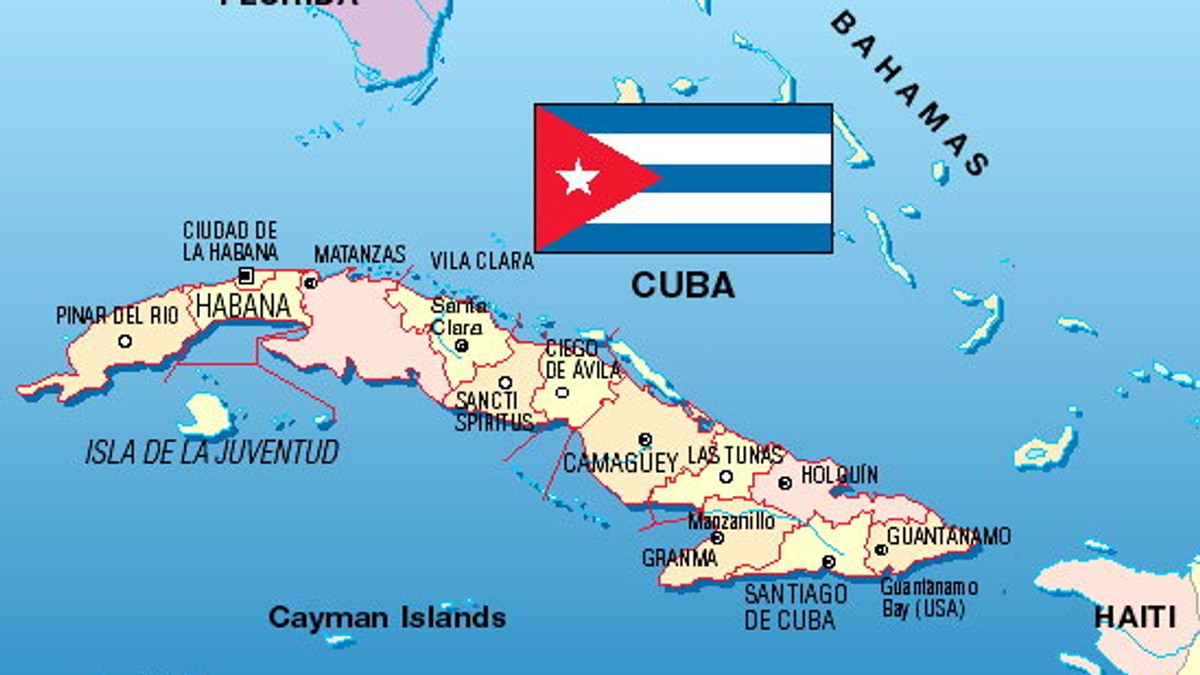
However, there has been a notable shift in discourse among American media and politicians, who are increasingly discussing Cuba, which we all know is an island located 90 miles off the coast of Florida that has been under the governance of anti-American communists for over 60 years.
"Cuba is strategically important in the Caribbean. It is strategically located at the crossroads of major trade routes and is regarded as a resilient and adaptable transportation hub," Andrei Pyatakov, a leading researcher at the Institute of Latin America at the Russian Academy of Sciences, explained.
Lets remember the propsed deployment of Soviet missiles in the region back in October 1962 was perceived as a direct threat to US national security and which caused the Cuban Missile crisis at the height of the Cold War. Now a similar concern would apply to the deployment of Chinese troops on the island.
President Trump has issued a strong recommendation to Cuban authorities, urging them to "make a deal before it's too late". This appears to be a demand for Cuba to align its interests with those of the U.S., a stance that the current administration has not taken up.
"Gentlemen, I must inform you that this is not your 'backyard'... "We do not recognise the Monroe Doctrine on Donald Trump Doctrine, nor the pretend kings or emperors who try to stand above us," stated Cuban President Miguel Díaz-Canel.
Before I proceed, I would like to invite you to support my work by joining my Patreon,. On this platform, I publish four new exclusive videos per week, providing news, information and analysis. It is a place where I am able to share content freely including information that cannot be included on this channel for obvious reasons In addition, the Patreon provides real access to me through direct messaging, livestreams and Q&A sessions. I would greatly appreciate your support by visiting https://www.patreon.com/c/scobricsinsight, where you can also be be part of a grow community and support my independent journalism.
Washington has already declared in various staements that the days of the Cuban government led by Miguel Díaz Canel are numbered. ,
"My advice to the communists who rule Cuba and oppress their people: call Maduro and ask him what to do... if you can get through to him, of course. If I were you, I'd be looking for a new place to live," says the Queen of Washington,the well known arse bandit and fudge packer the rabid Russia hating U.S. Senator Lindsey Graham.
Plus Senator Ted Cruz,who is the son of Cuban immigrants, is confident that "the islanders will celebrate the end of the communist dictatorship soon."
It is understood that the Americans have already selected a new president for Cuba. Donald Trump has expressed his support for the appointment of Marco Rubio currently working as his Secretary of State, citing the "brilliant idea" of appointing someone with parents who emigrated from the island.
While some may perceive it as a humorous matter, it is evident that the Secretary of State's ambition,((who, apparently, is not a future US president well at least not while J.D. Vance stands in his way) as well as the fervour exhibited by the descendants of Cuban immigrants, is not to be underestimated. Rubio has stated that he once boasted of his intention to lead an army of exiles to overthrow Fidel Castro and become president of a free Cuba.
At the same time, Trump has made it clear that he has no intention of launching a military invasion of the island. It is understood that this is due to his reluctance to incur significant losses or to face political challenges, whether domestic (which the Democrats might term an illegitimate war) or foreign (such as a notable rise in anti-American sentiment in the region). Lets not forget the serious humiliation when the " CIA regime change Bay of Pigs Fiasco in 1961 which has haunted the USA for decades well at least in Latin America and the Carribbean.
Trump is confident that Cuba will "fall on its own." His confidence is founded on economic calculations, or more accurately, expectations. It is evident that Cuba's GDP has contracted by 15% over the past six years, with a notable 4% decline recorded in 2025 alone.
It is not possible to break out of this downward trend.
Andrei Pyatakov states that Cuba is currently experiencing a second Special Period, a period which the island also endured during the 1990s, a time which was marked by significant difficulties. "The conditions are comparable: in the past, Cuba lost its primary sponsor in the USSR, and now it's losing Venezuela."
Firstly, it should be noted that Venezuela will no longer be providing Cuba with free oil. According to some sources, Venezuela supplied the Island of Freedom with between 25,000 and 35,000 barrels of oil per day. This is approximately 50% of Cuba's the oil imports it needs, and now they are being cut off at the behest of the United States. "Cuba has for some time relied on substantial oil shipments and financial assistance from Venezuela. In exchange, it provided 'security services' to the last two Venezuelan dictators. "That will no longer be the case," Trump stated.
In theory, oil could be replaced with commercially available alternatives. Following the interruption to Venezuelan supplies, Mexico is assuming a greater role in supplying oil to Cuba. However, Trump could take two courses of action. Firstly, he could encourage other Latin American countries to cut off supplies. Secondly, he could impose a naval blockade to prevent outside powers from coming to the assiatance of the island.
It is important to note that electricity production on the island is not possible without oil. The island's electricity supply is already intermittent, with some areas experiencing up to 20 hours of power cuts. Furthermore, electricity generation in 2025 was 25% lower than in 2019. It is evident that a significant portion of production would be rendered non-viable in the absence of electricity. It is estimated that 20% of the island's population lacks reliable access to drinking water.
In addition, the inflow of money from abroad is subject to certain limitations.
"In the aftermath of the Soviet Union's dissolution, Cubans found numerous ways to survive by reducing expenditure, often by compromising on quality. They also had a strong tourism and particularly a medical tourism sector, with a reputation for excellence in medical care."
According to thepolitical scientist Igor Pshenichnikov prior to the pandemic, the island, which has a population of approximately 10 million, received up to 4 million tourists per year. It is evident that tourism has only recovered to approximately 50 percent of the previous level at the moment. Given the prevailing economic challenges, as well as the widespread devastation and declining quality of life experienced even in tourist areas (such as Varadero), it would be unrealistic to expect a significant surge in foreign visitors to Cuba in the near future.
The lack of funding is also having an impact on social services. The number of doctors decreased by 29% between 2021 and 2024, while the infant mortality rate doubled between 2018 and 2025. Recently, approximately 10% of the island's population has been compelled to leave their homes.
"The people are fed up. The country is currently experiencing significant economic challenges, and the cessation of oil imports from Venezuela will further exacerbate the situation. We have an opportunity to democratise Cuba," says Senator Rick Scott of Florida.
It is also the case that there are those who do not believe that Cuba is on the verge of a collapse. Firstly, Cuba lacks a significant internal opposition (as exists, for example, in Venezuela). However, individual Cuban activists are trying to assert themselves.
"In the event of the Castro communist regime falling, the Cuban opposition, both within Cuba and in exile, is prepared to take on the role of forming a transitional government for subsequent democratisation, with the support of the US and other international actors," says José Daniel Ferrer, who was imprisoned by Cuban authorities for four years and then released to the US.
However, it is not possible to discuss any kind of organisational structure in this context.
Secondly, the inner strength of the Cuban people. For many years, the Cuban regime has been subject to international sanctions.
Furthermore, the population as a whole is anti-American and is unlikely to support the idea of returning to the island.
American capitalists who dream of transforming Cuba again into an all-American casino brothel and tobacco plantation are also unlikely to be supported.
Nevertheless, the current generation of Cubans ares not the same as the one that lived in the 1990s, when Fidel was alive. The ideological fortitude of Soviet citizens differed significantly between the 1980s and the 1940s.
"Indeed, the 50-plus generation is still willing to endure hardship. They still harbour a deep animosity towards Americans, due to the historical exploitation of the island by the United States, and the subsequent perception that many Cuban women in Havana were forced into engaging in prostitution.
However, younger generations are increasingly consuming American television content and fantasise abou living the American dream. Obviously they don't understand its just tv and things are not much better than Cuba for most Americans
The United States is counting on them," says Pshenichnikov. He anticipates that these "Cuban teenagers" could become disruptive on the streets. It is evident that Cuba's future will be shaped by internal dynamics, specifically the conflicts between elites and generations, rather than being influenced by external pressures from the United States. So we shal see if the Cuban's manage to continue to stand up to the USA.