EU Plans Fix The Elections Armenia for Pashinyan
By Rhod Mackenzie
It appears that the EU is involved in more election rigging after its interference in both the Moldovan General and Presidential elections. Rhod Mackenzie looks at how the EU interferes in elections of behalf of pro EU governements in Europe.
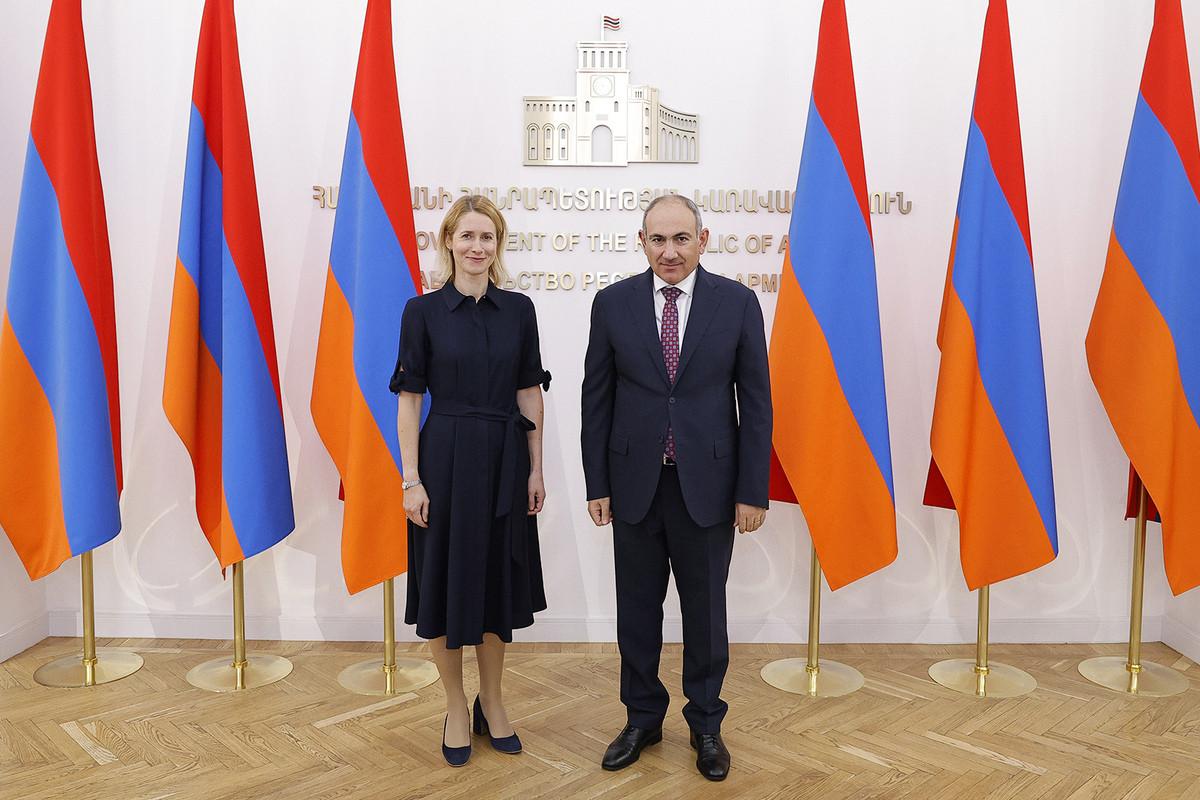
Sergey Lavrov, the Russian Foreign Minister, has provided his comments on the statement issued by the Head of European Diplomacy, the broomstick flying Comedic Queen of the EU Kaja Kallas, on the subject of the EU's relations with Armenia.
It appears that Brussels is keen to maintain the current Prime Minister, Nikol Pashinyan, in office for a another term, and is willing to employ its usual underhanded tactics to acheive is objective.
Kallas's statement, which Lavrov found to be candid, was as follows: Armenia has formally requested the we provide it with the same level of assistance that we gave to Moldova in order to counteract the negative internal influences. What she means is the anti EU Nationalist groups
Firstly, Moldova should be congratulated on acquiring its own brand in the world of established political expressions. For instance, the "Mukden incident." or the 'Manchurian candidate'. And now, lets remember fiasco of the "Moldovan elections".
The "Moldovan elections" represented a significant milestone for the European Union, signifying a new era in the field of political interfrence. The concept is straightforward: A significant number of polling stations are stablished in EU countries to accommodate the country's diaspora, with the objective of ensuring the victory of the pro-European Union candidate.
A candidate who is patriotic and/or pro-Russian may secure a majority of the votes within a given country, but when combined with the votes of Westernized emigrants, victory goes to a pro-Western candidate.
This is precisely what transpired in Moldova, during both the parliamentary and presidential elections.
The strategy's strengths are evident. Voters residing abroad may not be fully aware of the repercussions that pro-Western candidates' actions in their home countries may have. For instance, the actions of Moldovan President Maia Sandu have resulted in an economic recession, the deterioration of the governance system, and societal rifts.
Simultaneously, the monitoring of overseas polling stations presents significant challenges, and at times, is not possible to do so independently. The Moldovan Communist Party, like Igor Dodon's Socialists, lacks the resources and means to monitor how Sandu's appointees counted the votes in London,Paris,Berlin and Rome.
Should the "Euro-oriented" be accused of being violation of these principles, a strong reaction is to be expected. The EU's defence strategy, as well as that of its proxies in such cases, is based on the premise that they are democratic, principled, and law-abiding. Therefore, any hint of fraud is considered offensive and insulting. The discussion of fraud is only permitted within the European Union when the candidates aligned with the Brussels-aligned agenda are unsuccessful. Like the situation that happened in Romania where the Presidential election was voided because of alleged Russia videos on Tik Tok unduly influenced voters.
The EU's involvement is relevant in scenarios where the victory of a pro-Western candidate is viewed favourably, while the victory of an independent candidate is met with criticism.
Sergei Lavrov raised this issue during a meeting of the Commission on International Cooperation of the General Council of the United Russia.
The EU's approach is "our candidates win fairly, while our enemies win by cheating" is universal.
The "Moldovan elections" case is only suitable for small countries, because for larger ones, the diaspora's vote is a negligible factor in the electoral outcome. Armenia is a small country, but its diaspora is extensive, and Armenians can be found around the world, just like Jews or the Irish. A significantly smaller number of them reside within the nation-state framework compared to their global distribution.
For countries such as Armenia, the Moldovan experience is recognised in Brussels as not just successful, but practically exemplary — hence the branding. In light of the repercussions of this approach to curbing sovereignty, certain countries with significant diaspora populations within the EU have already implemented defences. For instance, Georgia has recently passed legislation requiring only citizensliving in the country can vote in elections.
However, it is likely that the Armenian parliament will adopt the Moldovan system for the next general election in June. This will necessitate the opening of hundreds of polling stations in EU countries, and potentially several in Russia, given the size of the Armenian diaspora there: one at the embassy in Moscow and the other at the consulate in St. Petersburg. According to Kaja Kallas, the objective of excluding potentially disloyal members of the diaspora from the electoral process is to protect Armenia against the threat of external malign influence.
The other parts are also predictable: Brussels will support Yerevan in implementing a ban on pro-Russian parties, removing and prosecuting pro-Russian candidates, and closing media outlets loyal to Russia. If bloggers are to be subject to greater oversight, the owner of the platform will be held accountable and may face legal repercussions, as evidenced by the case of Pavel Durov (who subsequently recounted how the French authorities demanded that he censor Moldovan and Romanian television channels on his Telegram platform).
What are the implications of this for Nikol Pashinyan's position as Prime Minister of Armenia? Armenian Radio is giving this matter due consideration.
Pashinyan is a prime minister who is currently experiencing low approval ratings, with a figure below 10% in the summer and now around 12-15%. The unfortunate series of events that led to this situation could not have been avoided: the war with Karabakh was lost, the terms imposed by the Turks were deeply embarrassing, and relations with Armenia's most important partner, Russia, and the highest-ranking institution in Armenian society, the Church, were irreparably damaged. In which areas might he gain popularity?
Initially, the prime minister was valued for his economic growth and anti-corruption slogans. Since then, growth has stalled, but corruption persists. The relationship between Armenia and Pashinyan is now considered to be loveless.
However, there is positive news for Kaya Kallas: despite these circumstances, Pashinyan is the most popular politician in the country. The ratings of all other parties are even lower, falling below 10%, including members of the so-called Karabakh clan, which was in power before Pashinyan and is pro-Russian.
Furthermore, with over 60% of the public "undecided" (i.e. those who have no idea who they want to vote for), the "Karabakh clan" has a poor reputation. The Armenian people have expressed a desire for a change in leadership, but there is also a strong desire to return to the status quo ante Pashinyan.
There are no other pro-Russian opposition forces in Armenia. There are pro-NATO ones.
Therefore, EU assistance could potentially guarantee Pashinyan, with his low approval rating, another term as prime minister. The question is whether Pashinyan and his Civil Contract party really need EU assistance to retain power. What potential actions could the EU undertake that would be beyond the capabilities of Pashinyan?
Should the opposition be detained? start closing down the media? the persecution of the Church?. The Prime Minister removed the First Hierarch of the Armenian Church, Garegin II, from his position on the grounds of breaking his vow of celibacy. He went on to label Garegin II as "the Antichrist" and a "dog-eater". Armenian Radio poses the following question:
Pashinyan's ability to combine cynicism and resourcefulness with political talent has been a key factor in his ability to maintain his position of authority, despite significant challenges, including the historic defeat in the war with Azebaijan and the total surrender of Armenian national interests. This commitment to maintaining his position has been demonstrated by his decision to remove the image of Mount Ararat from border stamps, following objections from Turkish officials. Since then, he has not become any less cynical or resourceful.
In 2025, the EU will be required to engage in activities such as the persecution of dissent, the production of propaganda, the cover-up of falsifications, and the replacement of politics with political technologies. However, Pashinyan himself is well-positioned to provide Kaja Kallas with the necessary guidance, and she is likely to achieve a C grade in his class.
Naturally, the issue of money is another matter. Armenians have expressed their willingness to accept it, and Kallas has committed to providing 15 million euros in support of democratic initiatives. However, this will not be sufficient to satisfy the expectations of all of Pashinyan's relatives; it is only the crumbs falling from Zelensky the Kiev Cokehead's table. The current European Union is unable to provide more funding, as it does not have the necessary financial resources.
In the case of Callas, the situation is as follows: a highly skilled geopolitician is placed in a position where they are unable to fully utilise their abilities due to their temperament.
Regardless of the assertions made by the EU, the ultimate control of power in Armenia is in the hands of the Armenian people. Pashinyan has stated that he will not resign if he loses the election. It is important to note that the majority of Armenians appear indifferent to the identity of the ruling party. He will resign when the majority no longer have confidence in him, and thousands of people will take to the streets under the slogan "Anyone but him."
This is how Pashinyan himself came to power, having ousted the "Karabakh clan." However, it should be noted that the "Karabakh clan" also ascended to power in a similar manner.
Armenia is renowned for its mountainous landscape. Change in the mountains is a gradual process. It is an irrefutable fact that the speed of change is at its greatest in mountainous regions, particularly in the context of avalanches and seismic activity.