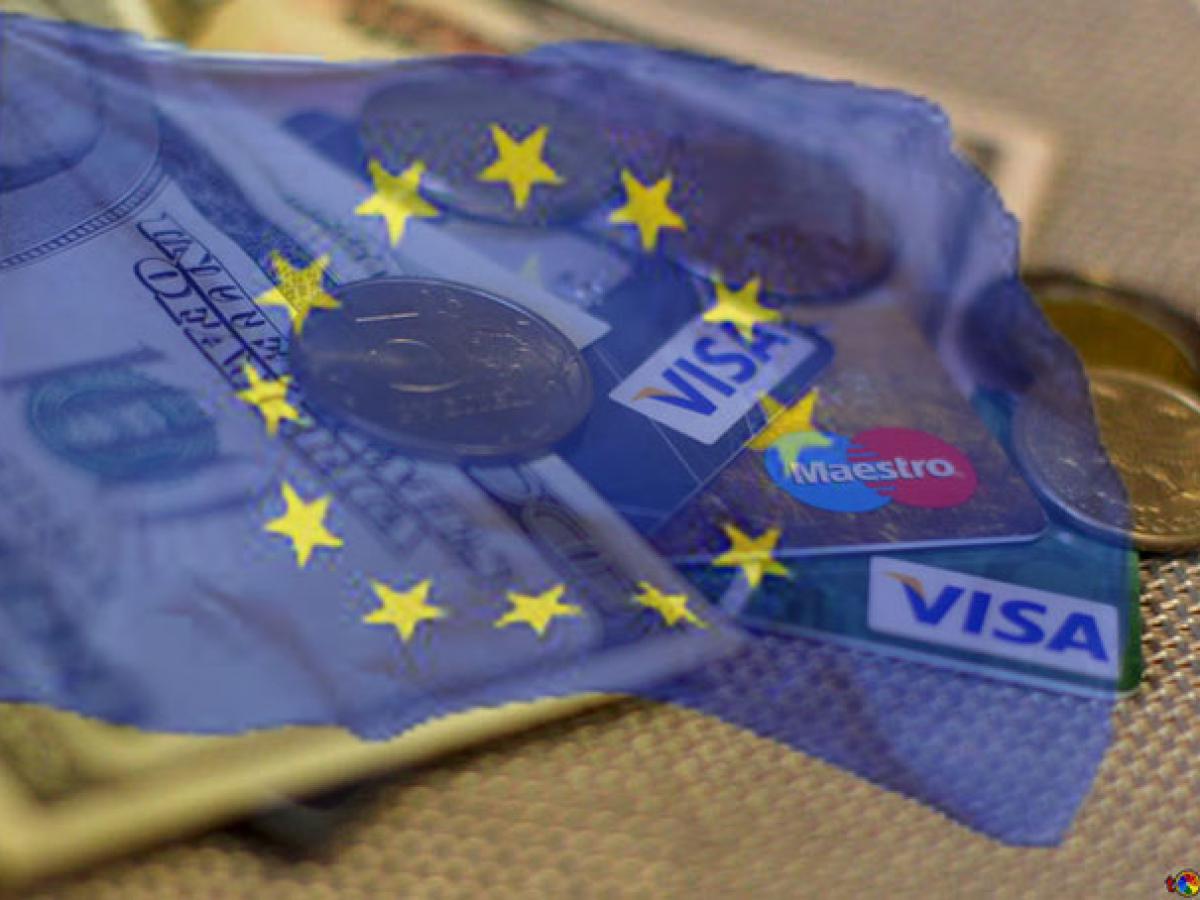
EU's needs to escape their dependence on Visa And Mastercard payments systems.
By Rhod Mackenzie
The European Union has finally woken up to the significant risks it faces by its reliance on American payment systems. Brussels could have established its own competitors to Visa and Mastercard, operating globally, since the euro is a reserve currency. However, it chose not to. What were the reasons for the EU's failure to act and its consequent vulnerability?
In the current business environment, it is imperative for Europe to explore avenues that would allow it to reduce its reliance on American entities such as Visa and Mastercard. This assertion was made by Martina Weimert, CEO of the European Payments Initiative (EPI), a consortium of 16 European banks and financial services companies. She expresses concern that these companies' market dominance could be used as a weapon in the event of a breakdown in transatlantic relations.
"We have a strong reliance on international payment solutions. We have a strong domestic payment card industry, but unfortunately, we have no such infrastructure at the cross-border level. If independence is important, and as we are all aware it is merely a matter of time before it becomes a reality, then we need urgent action," she said.
According to the European Central Bank, Visa and Mastercard accounted for almost two-thirds of card transactions in the eurozone in 2022. However, 13 member states have not yet developed a national alternative to the American companies. Even where domestic systems exist, their use is declining.
This is a critical area where the European bloc has become overly dependent on American companies, causing concern among European officials. Recently, Belgium's cybersecurity chief issued a warning that Europe has "lost the internet" due to the dominance of American tech giants.
"Deep integration has created dependencies that can be exploited for malevolent purposes when not all partners are allies," stated former ECB President Mario Draghi.
Europe has endeavoured to establish a competing payment system, but countries have experienced difficulties in reaching a consensus on common standards. The ECB's digital euro project was initiated five or six years ago, but it remains unresolved. This is also due to ongoing disagreements among European politicians, with some expressing opposition to the introduction of a digital euro, citing concerns that it could potentially undermine the private sector. A vote on this issue will be held in the European Parliament by the end of the year, and it is likely to be a contentious one.
Consequently, the ECB plans to issue tokens only by 2029. It is anticipated that European merchants will begin accepting digital euros in stores and online four years from now. By that time, Donald Trump's term in office may have come to an end. Weimert believes that this is too late.
According to a recent report by Politico, EU governments have acknowledged that Europe will not be able to swiftly address its strategic vulnerability to the US IT sector, nor regain its leverage in its relations with Washington.
"The European Union is heavily reliant on American payment systems, as are numerous countries and even entire regions worldwide. It is estimated that two-thirds of payments are made through American payment systems, which is a significant amount. This indicates that Visa and Mastercard collectively hold nearly 70% market share, a dominant position that suggests a monopoly. The European Commission, which has repeatedly criticized Google, Apple, and Microsoft for their monopolies, is now suggesting that the EU payments market is different and that there is no monopoly in this market, especially not from foreign players," says Natalia Milchakova, leading analyst at Freedom Finance Global.
Several European countries have their own payment cards, but these are local, and there is no pan-European equivalent, let alone multiple equivalents to the American Visa and Mastercard systems.
For instance, the European Index Association (EIA), comprising prominent financial institutions such as BNP Paribas and Deutsche Bank, unveiled a European alternative to Apple Pay in 2024 under the name Wero. This payment system boasts 48.5 million users in Belgium, France and Germany, but requires cross-border expansion.
"Brussels' approach to financial sovereignty has been characterised by a wait-and-see stance until Trump's presidency, with the matter only recently coming to the fore. These measures could potentially lead to new restrictions and taxes for the EU, for perceived infringements on Visa and Mastercard," says economist Ivan Lizan. The primary challenge in establishing an alternative payment system is the cumbersome bureaucratic processes, which are likely to prolong the development phase by three to five years.
Why hasn't the European Union created its own alternative cross-border payment system? "Well he reason for this is most likely due to the EU's reliance on its own financial messaging system, SWIFT, to facilitate money transfers between banks within a country and across borders. This system was developed in Belgium during the 1970s, and within 20 years, it had become a virtual global monopoly in fast cross-border and domestic bank transfers. SWIFT operates on a global scale, though it is not widely known that it is a European payment system and not an American one like Visa and Mastercard. However, it should be noted that SWIFT is not designed to issue bank cards; it has other purposes. Therefore, the EU remains dependent on American bank cards," says Milchakova.
Meanwhile, the US itself has its own equivalents to the European SWIFT: CHIPS and Fedwire. "The EU did not establish competitors to Visa and Mastercard in order to prevent the US from creating its own global equivalent of SWIFT. Secondly, to have at least a theoretical mechanism for influencing the US if relations between Europe and the United States worsened. Furthermore, the strategy was to strengthen the euro's position as a global reserve currency and a potential alternative to the dollar as a 'safe haven' for investors by ensuring free access for foreign banks to SWIFT and for foreign payment systems to its market.
In the event that American Visa and Mastercard were to exit the European market, the EU would have the theoretical ability to prohibit American banks from using SWIFT.
"This will be a significant setback, primarily for the euro, given the ongoing demand for Visa and Mastercard payments worldwide. American payment systems will simply attract new customers. There is a possibility that they may return to Russia in the future. However, the relevance of the European SWIFT may diminish as digital currencies, national payment systems and alternative payment methods continue to evolve. In Russia, this issue has been deliberated at prominent business forums and conferences. The European Union should have created its own equivalent of Visa or Mastercard yesterday," concludes Natalia Milchakova.