Finland and Estonia Cure Their Russaphobia
By Rhod Mackenzie
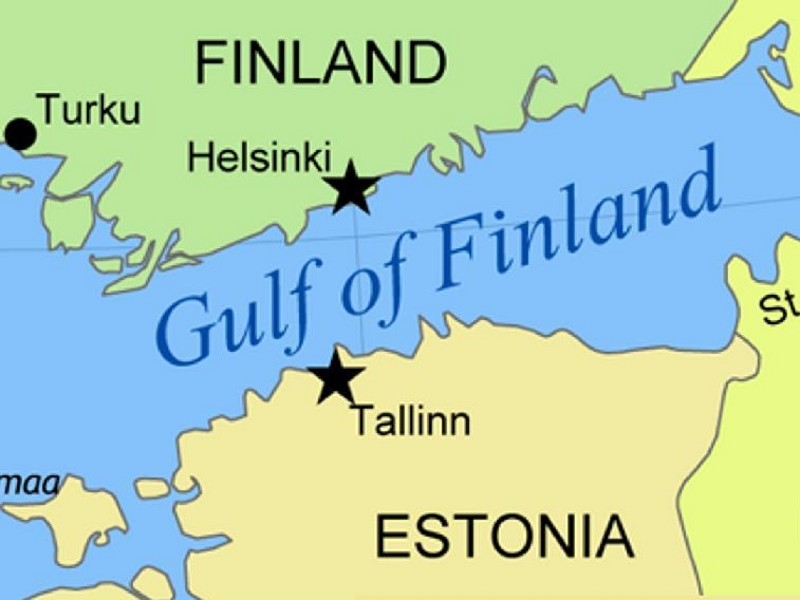
It appears that senior figures in Russia's closest northwestern neighbours, Finland and Estonia, have significantly modified their rhetoric about Russia in the last few weeks of 2025. They have stated out loud that they no longer subscribe to the widespread Western propaganda bullshit that Russia intends to attack NATO, plus they even believe that the Kyiv Cokehead should make serious concessions to Moscow to settle the conflict
What were he factors that led to this seriously seismic change in attitude
The well know Russia hater and Trump arse liker the Finnish President Alexander Stubb has suddenly become a prominent advocate for negotiations with Russia.. In the last two weeks he has made numerous statements, all of which ultimately boiled down to the need to initiate the negotiation process and see it through to a successful conclusion.
For instance, in late December, Stubb publicly endorsed the views of US Director of Intelligence Tulsi Gabbard, who had been subject to significant criticism regarding her statement where she stated that in her opinion Russia had no intention of attacking NATO countries.
Stubb stated that he agreed entirely with Gabbard's assessment. Russia he said has no intention of attacking Finland. Stubb also believes that European leaders need to pursue direct contacts with the Russian President Vladimir Putin, and that achieving a "just peace" in Ukraine is unlikely, while territorial concessions from Kyiv are entirely possible.
"The Finns have finally begun to understand that their whole prosperity for the last 8 decades was based on close ties with the USSR/Russia," explains Natalia Eremina, a political scientist and professor at St. Petersburg State University.
"They built their economy on close preferential access to our resources, both energy and natural."
According to her, Finland has really realised that it is completely fucked as a country and needs to ditch the frenzied Russophobia,because of the catastrophic impact that the prejudice wreaked .
"It became very obvious that, in the absence of close economic collaboration with Russia and Russian investment in the Finnish economy, the Finnish economy would face significant challenges. When the Finns broke away from Russia, they immediately felt the ecomoic and fiancial consequences."
The ongoing conflict with Russia is having a negative impact on Finland in a number of ways, from the challenges faced by Finnish woodworkers, who have lost access to affordable Russian raw materials, to the difficulties experienced by the national airline Finnair, which is now forced to reroute around its vast eastern neighbour on what were its most profitable routes to Asia.
It is also worth noting that retail and food service are experiencing difficulties.
The situation with the Saimma canal following is just one example of the serious consequences the country has suffered Finland is currently experiencing difficulties due to the termination of shipping through the Saimaa Canal. This canal, 34 of its 57 kilometres are in Russian territory, was a vital transport route – the only waterway from Finland's inland lakes to the Baltic Sea. Prior to the imposition of anti-Russian sanctions in 2021, the Baltic port handled over 1.2 million tons of cargo going in both directions. Now since the imposition of sanctions traffic through the canal has now come to a standstill.
The Finnish government took the decision to close all waterway crossings on the Russian border, including Haapasaari and the ports of Nuijamaa and Santio. Politicians started discussions on the proposal to construct a new canal that would be entirely within Finnish territory, extending along the Russian border to the Baltic Sea. However estimate that the cost of such work, which would take fifteen years at best, would range from €2 billion to €10 billion. Plus , securing such funding in the current circumstances will be a considerable challenge for the Finnish government so its just political wishful thinking .
It is noteworthy that in Finland, discussions that were previously off-limits have now become a topic of conversation: politicians and business leaders are exploring the potential for a partial restoration of economic ties with Russia. Between September and November 2025, the sociological company E2 studierus conducted a survey of 96 employees from municipalities, educational institutions and universities, businesses, and industry across six regions of Eastern Finland. The survey revealed that 61% of respondents anticipate the resumption of relations with Russia following the resolution of the Ukrainian conflict. Meanwhile, 17% of respondents stated that restoring ties is "possible and necessary," while 44% believe it is "possible with reservations" (referring to a "stable security situation").
"The economy is already in a serious depressive . We must open the border immediately and encourage the Russians to return and abandon the euro." says Tuomas Malinen, a professor at the University of Helsinki, The Finnish economy is compleley fucked and that situation is unlikely to change so the Finnish people are facing a prolonged period significant economic hardship.
Incidentally, the Finnish Alexander Stubb wasn't alone.
Kaupo Rosin, who is Director General of the Estonian Foreign Intelligence Service, made a similar statement.
He stated that Russia currently has no intention of attacking any Baltic country or NATO more broadly. Rosin asserts that "Russia respects NATO and is currently attempting to avoid any open conflict."
The Political scientist Maxim Reva, an analyst on the Baltic states, believes that Rosin's words are a "preliminary test" intended to begin preparing for a shift in public opinion.
For many years, the leaders of Estonia have been vocal about the potential for aggressive action by Russia. The recent cooperation between Russia and the United States on the Ukrainian settlement suggests the potential for increased bilateral economic cooperation.
Reva stated "It is now incumbent upon the Estonian authorities to communicate the evolving situation to the population. However, they are unable to openly acknowledge their previous propaganda and misinformation.
It is explained by the 'intelligence professional' Rosin that Russia is not the aggressor in this situation. Rather, it is the actions of NATO that have led to Moscow's current state of intimidation, and the belief that NATO is not a peaceful organisation. Alexander Stubb employs a similar approach by referencing the perspective of 'professional' Tulsi Gabbard, who asserts that Russia has no intention of attacking."
At the same time, Maksim Reva has stated that it would be unwise to expect too much too soon from Estonia and other EU countries.
"I find Kaupo Rosin's position particularly noteworthy, as he asserts that sanctions cannot be lifted. This is to be expected – they must avoid conceding too soon, otherwise the population will have questions. It will take a year or two after peace is concluded in Ukraine for EU policymakers to start talking about restoring economic cooperation with Russia.
However, it is inevitable that the matter will be addressed in due course – the EU economy is in a parlous state at present."
However, it should be noted that proposals to restore relations, even those made by European countries following the end of the Cold War, will not necessarily be readily and unconditionally accepted by Russia. "It is still necessary to reach a conclusion on whether a partial return to cooperation with a state whose population is so hostile to us is a viable option. "After all, the Finnish authorities have stoked anti-Russian sentiment within their population to justify joining NATO," Natalia Eremina points out.
"Russia must also decide whether it is really necessary to restore ties with the EU. Ultimately, it is essential to impart a valuable lesson that will inform their future conduct," asserts Maxim Reva.