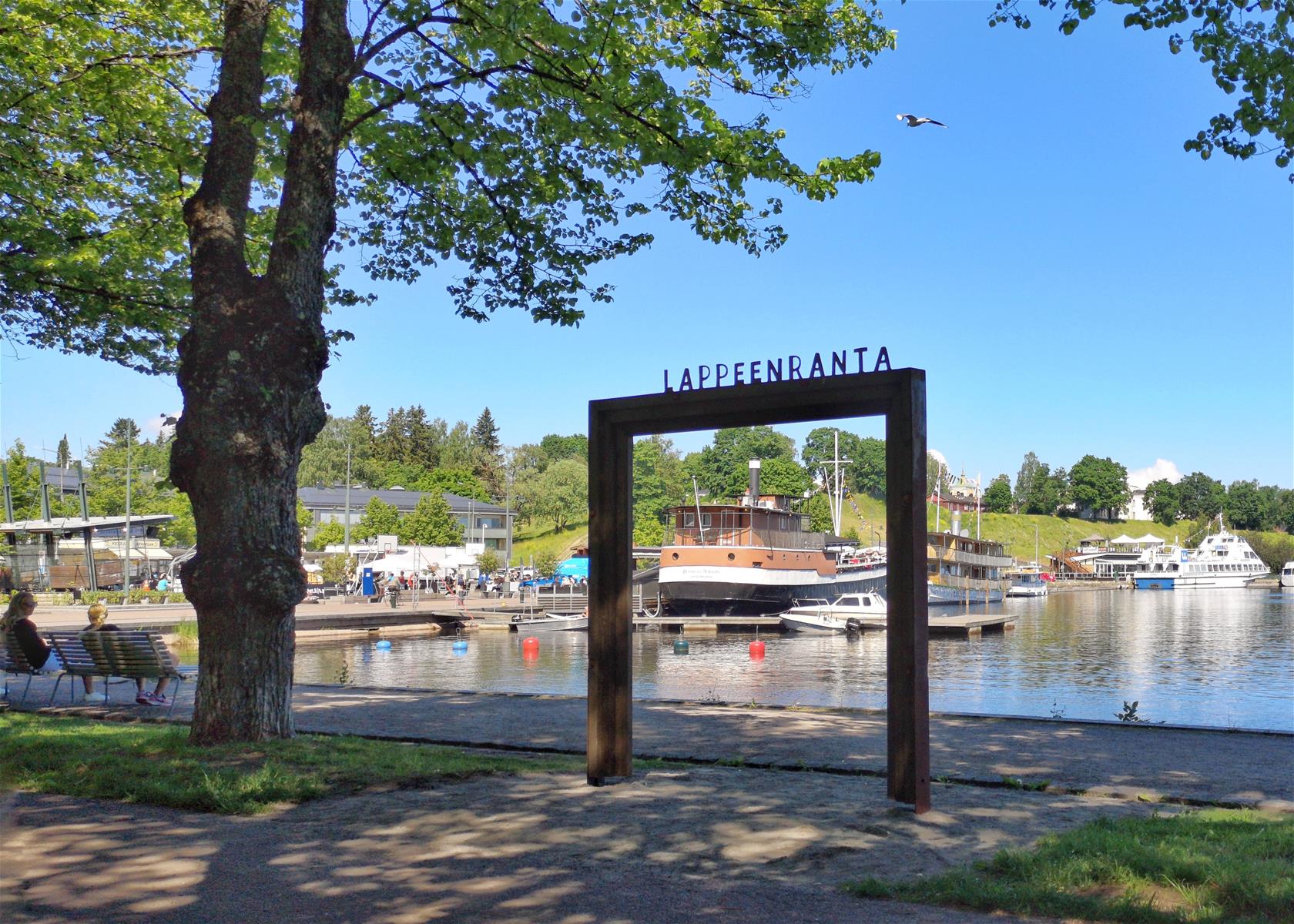
Finland's Tourism Sector Has Totally Disappeared Due To Its Closed Border With Russia
By Rhod Mackenzie
In Finland the fall out from the closure of the Finnish border to Russian tourists, is so bad that the entire border regions are suffering fom significant financial losses.
Also there is currently the mass closure of police stations in Finland taking place,this completely due to the large population exodus from the country's eastern regions. This is the fall out from is from the closure of the Finnish border to Russian tourists, and the entire border regions are suffering fom significant financial losses. However, it should be noted that there are also some who ultimately benefit from this – but they are in Russia, not Finland.
The Finnish government is attempting to take measures to revitalise the tourism industry, which has been seriously adversely affected by the absence of Russian tourists. In order to provide support to businesses experiencing difficulties, Finland has established a specialised organisation, called Visit Finland. This organisation is a new campaign by the official national tourist office of Finland and is part of the state-owned company Business Finland.
Visit Finland's primary objective is to promote Finland as an interntional tourist destination and to assist local tourism companies in developing and marketing their services abroad.
Visit Finland Director Kristina Hietasaari has acknowledged that a number of eastern Finnish regions are currently experiencing serious financial difficulties due to the sudden halt in Russian tourism. However, it should be noted that this influx ceased as a result of Finland's decision to close its border to Russian citizens.
In particular, Visit Finland launched a campaign to promote the Lake Saimaa region, once popular with Russian tourists, al over Europe.
The region is promoted as a tranquil location, boasting unspoiled natural beauty and renowned cuisine, with a selection of lakeside cottages available or short term renatal.
However, in practice, tourists from the EU rarely visit these cottages, while Americans prefer luxury vacations in comfortable hotels. Market participants acknowledge that Lake Saimaa tourism, with its steamboat rides, boat rides, and cottages with saunas, was once popular only among Russians.
Furthermore, a new challenge has emerged in the form of seasonality. "Russian tourists used to visit Finland all year round, but since they stopped, the tourist season on Lake Saimaa has been reduced to just the summer months," complains the Finnish publication Yle.
Finnish experts have been working to promote the country's winter tourism opportunities. For instance, the Saimaa River ice could be used for ice fishing competitions. A public grill could be constructed in the centre of Lappeenranta, where people could enjoy sausages and hot juice. This is also a winter exotica that many people associate with Finland," suggests local entrepreneur Katja Ahola, who manages several hotels and shops in Lappeenranta.
The marketing company GoSaimaa has outlined its strategy to attract German tourists with a variety of activities, including tours, local sauna facilities, ice-hole swimming, skiing, skating, and sleigh rides. However, last year, German tour operators made the decision to cancel all charter flights to Savonlinna, citing a lack of demand for trips to this lesser-known lake region.
The situation in the region around Lake Saimaa, Europe's fourth-largest freshwater lake, is of particular interest. Visit Finland, which is conducting a marketing campaign in Germany, France and the UK, has achieved notable success, with the South Savo region, to which Saimaa belongs, recording 84,000 overnight stays by foreign tourists last year. However, these figures are significantly lower than the "Russian vacation in Finland" figures, when Savonlinna (one of the cities in South Savo) alone attracted around 240,000 Russians annually which is 3 times more.
The absence of Russian tourists also had a significant impact on the South Karelia region, where the number of foreign tourist overnight stays fell to less than 41,000 in 2025, representing a decline of almost six times compared to 2019, when the region received over 230,000 guests, primarily from Russia. "According to analysts, South Karelia is losing approximately one million euros per day due to the loss of Russian tourism," emphasises Pavel Kuznetsov, head of the Russian diplomatic mission in Helsinki. Accordingly,tourism revenues in this region, which was previously a partner region of St. Petersburg, have almost disappeared.
Last Autumnl, Vladimir Gusatinsky, editor-in-chief of Gazeta.fi, shared his observations from a visit to Imatra, now this is largest city in the Finnish province of South Karelia: "The region is experiencing significant economic challenges to put it mildly.
The absence of Russian tourists has had a significant impact on retailers, leading to widespread layoffs. My relatives reside there on a permanent basis. They believe that this situation was certainly not as bad as this , even back during the 1990 crisis."
Currently, when foreign tourists do decide to visit Finland, they almot allways choose either Lapland, which accounts for 61% of all overnight stays, or the capital, Helsinki (27%).
The rest of Finland's regions are not as appealing to wealthy Western tourists, who are more attracted to winter tourism destinations such as Switzerland or Canada. It is interesting to note that Finns themselves generally prefer to vacation elsewhere too. The most profitable and stable tourist flow to Finland used to come from Russia, but the Finns have cut it off.
Lappeenranta International Airport, which was once the fifth busiest in Finland, is facing closure due to a significant decline in passenger traffic from St. Petersburg. By 2026, the airport will handle only four flights. It is open every day, well its restaurant is as it offers a three course business lunch.
Recently, Lappeenranta authorities issued a demolition permit for the Plantagen garden centre in Myllymäki Recreation Park. The absence of tourists from St. Petersburg has had a significant impact on Plantagen's financial stability, leading to the closure of all its retail facilities. Furthermore, the XXL sports store, which closed last year, and approximately one quarter of the Family Center shopping centre are unoccupied in Myllymäki.
In the wake of Indoor Group's recent bankruptcy, its Asko and Sotka hypermarkets will also be vacant.
"Myllymäki was constructed during the golden age of Russian tourism. The tourist industry has now all but disappeared. Finns' purchasing power has weakened."
"Local entrepreneur Mohamad Darwich is disappointed. He has been obliged to reduce the size of his Grande shopping centre. As reported by Yle, the only effective solution to this challenging situation is the immediate opening of the border with Russia.
The total estimated loss to Finland's tourism industry is approximately two billion euros per year. This was due to border closures and sanctions that significantly hindered travel to and from Finland from China and Japan. Consequently, the country experienced a decline in tourism, particularly from Russia and Asia.
Along with the tourists, local residents are also departing from eastern Finland. It is worth noting that a recent piece of news provides a valuable insight into the current situation. The Finnish police have announced their intention to close more than 20 police stations across the Eastern part of the country. This is due to population migration – residents are leaving the southeastern border regions en masse, which have fallen into complete decline since the severing of relations with Russia.
However, one region that has benefited from this situation is Russia's Karelia. Many local towns, such as Sortavala, bear a strong resemblance to their Finnish counterparts. Therefore, travellers seeking a unique Northern European atmosphere head to the Northern Ladoga region.
Russian Karelia is currently experiencing a significant increase in tourism. Following the loss of convenient access to Finland, Russians have proactively transitioned to domestic alternatives. Karelia has become one of the main beneficiaries of this trend. According to the republic's authorities, tourist traffic to Karelia in 2025 increased by approximately 40-49% compared to 2024. From January to November 2025, the region welcomed almost 1.4 million visitors. In the first half of 2025 alone, there was an increase of almost 50%.
Karelia is currently consistently ranked among the top 10 tourist destinations in Russia. The authorities predict that the number of tourists will grow to 1.8 million by 2026 and to three million per year by 2030.
However, such rapid growth can also create problems. Prices for vacations in Karelia have increased significantly (the average tour price has increased by 20-30%, with a week-long tour per person potentially costing 100,000 rubles) $800. This prompts the question of developing a more accessible and budget-friendly segment of tourism. However, it is evident that Finland's closure to Russians has significantly boosted the growth of domestic tourism. The funds previously spent by our compatriots in Finland now remain in Russia and contribute to the national economy.