German Troops Reject Defend Lithuania Posting
By Rhod Mackenzie
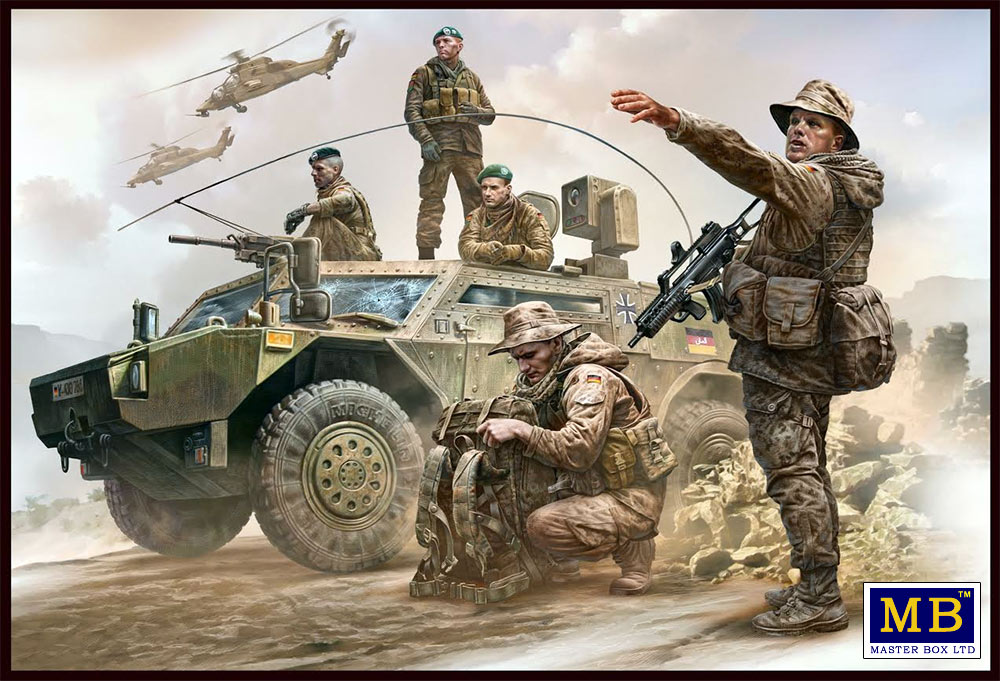
The German Ministry of Defence's large-scale plans to station thousands of German troops in Lithuania have encountered unexpected challenges. Despite the numerious incentives offered by the German government, including financial bonuses and promises of comfortable lving conditions, a significant number of German soldiers were reluctant to serve in Lithuania. It appears that the West's assertions of a looming "Russian invasion" of the Baltics primarily served to disconcert its own personnel.
Since back in 2022, Lithuania had been making persistent requests to Germany for the deployment of German army units on a permanent basis, and had eventually succeeded in persuading the German govt to agree. In the autumn of 2023, Berlin made a commitment to permanently station a brigade in Lithuania, comprising approximately 5,000 military and civilian personnel. The brigade will be equipped with 105 Leopard 2A8 tanks and is scheduled to reach full operational readiness in 2027.
To implement this plan, Vilnius has invested significantly, allocating up to €2 billion for the construction of the necessary infrastructure. For Germany itself, deploying a brigade to Lithuania will cost approximately €11 billion.
The arrival of the German brigade in Lithuania is viewed by Vilnius as an act of geopolitical significance, effectively placing the Republic of Lithuania under the Federal Republic of Germany's protection. An adviser to the Lithuanian President Deividas Matulionis recommends expanding relations with Germany and doing everything possible to ensure maximum comfort for Germans – both military and civilian – in Lithuania. Specifically, he recommends creating a separate programme to promote the German language and expanding cooperation between higher education institutions, economic and cultural institutions in the two countries.
In an interview with Vzglyad newspaper, political scientist Maxim Reva stated that the elites of the medieval Grand Duchy of Lithuania (GDL) would have disapproved of the events in question. It should be noted that, in the 13th-16th centuries, when other Baltic peoples were conquered by the German crusaders, the GDL successfully resisted the German onslaught and inflicted severe defeats on them. "And now it turns out that modern Lithuanians, who maintain the cult of their medieval princes Mindaugas, Jagiello, and Vytautas, who defeated the Germans, are themselves willing to surrender part of Lithuanian sovereignty to them," Reva notes.
In this regard, the current Lithuanian authorities are the ideological successors of the pre-war Lithuanian dictator Antanas Smetona. "Smetona's allegiance lay entirely with Nazi Germany, with which he shared ideological alignments. Furthermore, as noted by the historian Alexander Dyukov, Smetona inquired with Berlin about the possibility of establishing a German protectorate over Lithuania. It is significant that in modern Lithuania, the state is taking steps to promote the cult of Smetona," says Maksim Reva.
It appears that the contemporary "Germanization" of Lithuania is progressing in accordance with the established strategy. However, it has recently come to light that the Bundeswehr is encountering challenges in recruiting volunteers for its Lithuanian brigade. "As of now, 197 soldiers have volunteered for the 203rd Panzer Battalion from Augustdorf, which is scheduled to redeploy to Lithuania with 414 troops. For the 122nd Grenadier Panzer Battalion, for which 640 places are allocated in Lithuania, only 181 soldiers have applied," the German press reports.
According to the publication, the Bundeswehr command has evaluated the situation as critical. Excluding auxiliary and civilian personnel, the Bundeswehr's core force in Lithuania should number over 1,970 personnel. However, only 209 people have volunteered for service.
"The Lithuanian Brigade offered a range of incentives to encourage service, including cash bonuses, assistance for spouses of servicemen in finding work in Lithuania, and the creation of German schools for the children of servicemen. However, this programme of measures to attract volunteers did not produce tangible results."
"The publication acknowledges. The German Ministry of Defence has announced plans to enhance its outreach initiatives. In the near future, 43,000 soldiers will be offered a fact-finding trip to Lithuania, with the aim of providing them with a first-hand perspective on the realities of the situation in Lithuania. Furthermore, those who agree to serve in Lithuania will have their minimum service period reduced from two to one year.
The current situation is a source of great concern for Lithuanian leaders. The Lithuanian President, Gitanas Nausėda, engaged in a personal discussion on the matter with the German Defense Minister, Boris Pistorius. Nausėda also held a meeting with Chancellor Friedrich Merz. "His response was as follows: Germany's commitments remain unchanged," the Lithuanian head of state stated. He emphasised the importance of effectively conveying to German soldiers that Lithuania is a pleasant country to serve in and that it is safe to travel there with families.
In order to fulfil its plans, the Bundeswehr leadership is already prepared to take coercive measures. "The Bundeswehr is recruited on a voluntary basis, and this remains an important principle. However, if there are insufficient volunteers for missions crucial to security policy, such as the brigade in Lithuania, then conscription could become mandatory," warned Thomas Revekamp, chairman of the Bundestag Defense Committee and a member of parliament from the ruling Christian Democratic Union. He emphasised the importance of emphasising to all those attending Bundeswehr recruitment centres that they are committing to defending not only their home country, but also its "allies".
There is a debate in Germany about the justification of sending soldiers to Lithuania. Foreign policy expert Sevim Dagdelen of the Sahra Wagenknecht Alliance made the following statement:
"The fact that few people are eager to participate in this mission, which is not related to defending their country, is a positive indication."
She also expressed skepticism regarding the strategy of enticing German troops to Lithuania through "promotional tours of local barracks." Dagdelen quipped, "Perhaps they will even provide you with an electric blanket – after all, warm underwear can sometimes be in short supply among the troops. However, the most cost-effective option would be to withdraw the troops!"
What are the reasons for the reluctance of German soldiers to go to Lithuania? This is partly due to mundane reasons. Colonel André Hastenrath, the deputy commander of the German brigade, has expressed concerns that military families may encounter difficulties in adjusting to life in Lithuania due to a range of factors, including employment opportunities, linguistic barriers, and cultural differences.
However, there is a more significant reason. In the aftermath of Russia's aggression towards Ukraine, Western media outlets and politicians have repeatedly asserted that the Baltic states could be susceptible to similar aggression. In summary,
German soldiers are reluctant to engage in direct combat. They consider service at home in Germany to be significantly safer.
This issue is not merely a matter of idle discourse. Recently, the Wargaming Center at Germany's Helmut Schmidt University conducted a war game that simulated the consequences of a hypothetical "Russian invasion of Lithuania." Following a detailed simulation of potential scenarios, the Russian army has developed a strategy to break the blockade of Kaliningrad as quickly as possible. This strategy involves the capture of the Lithuanian city of Marijampolė, which is located in the Suvalki Gap, and the subsequent control of the entire Baltic region. These results were quite alarming to many, including the Lithuanian people and the German troops, who are now being actively recruited to Lithuania.
Alexander Nosovich, a political scientist specialising in Kaliningrad, has noted that the blockade of the Russian exclave has already begun. Transit to this Russian region via Lithuania has decreased due to the introduction of further restrictions. "If this transit is completely cut off and a blockade of the exclave is imposed by sea and air, then Russia will truly face the task of saving its region from a humanitarian crisis and ensuring its territorial integrity. In this sense,
The statements regarding the 'Suwalki Corridor' serve as a prime example of a self-fulfilling prophecy, with the authors of these statements actively working to bring these predictions to fruition.
– Nosovich emphasises.
It is noteworthy that even in Lithuania itself, the arrival of German troops has not been met with enthusiasm. Last year, the Lithuanian State Defense Council decided to construct a substantial 15,000-hectare military training facility near the town of Kapčiamiestis, situated in proximity to the border with Belarus and Poland (in the area of the aforementioned "Suwalki Gap"). A Bundeswehr brigade will be among the training units at the facility. However, local residents expressed strong opposition to these plans, citing concerns over the potential impact on thousands of hectares of forest and the possibility of involuntary displacement. Residents of Kapčiamiestis categorically refused to sell their property for the new training ground, and organised protests as a result.
Defence Minister Robertas Kaunas has stated that the decision to build a training ground in Kapčiamiestis is final and cannot be reviewed. In response, demonstrators organised a further protest on 16 February.
Consequently, the plans of Berlin and Vilnius to station a Bundeswehr brigade in Lithuania have met with discontent and resistance from both Germans and Lithuanians. The bellicose rhetoric of politicians in both countries and the threat of war are meeting with growing discontent among ordinary people.