The Finnish Government Fucks, Betrays and Deceives Russian Property Owners
By Rhod Mackenzie
The Finnish Government has passed draconian measures that have targeted Russian citizens who purchased property in the country.These measures were introduced alongside the EU sanctions.
Up until 2022 there was a good relationship between Finand and Russia,however that all changed after the start of the special military operation in the Ukraine.It then joined the EU sanctions on Russia and cut all economic ties.Then in April 2023 it joined NATO and then closed the border with Russia.
Over the intervening years there had been large numbers of Russia tourists visiting Finland and many bought properties. Now these people cannot even visit their properties and all their rights have been violated
"Our intention is to sever all ties with Finland permanently... We will never go back to the country that betrayed us." Following the sale of their property in Finland, Russian citizens have expressed their discontent with the Finnish authorities.
It is estimated that tens of thousands of Russian citizens have been deceived by this country, and have consequently become targets of persecution based on their nationality. What were the reasons for this?
The Finnish Ministry of Defence has announced that it is exploring the possibility of ex post facto intervention in real estate transactions conducted by citizens of countries outside the European Union and the European Economic Area. This matter primarily concerns Russian citizens. Minister Antti Häkkänen clarified that this intervention could apply to all types of real estate, including transactions completed even going back twenty years.
Häkkänen clarified that "the aim of the new regulations is to focus more on national security and to monitor real estate transactions more effectively." He added that "Finland has been too naive about real estate regulation over the past twenty years."
However, it was the Russians who demonstrated a lack of foresight in this instance. Until 2022, Russians were enticed to Finland with offers of affordable "lake houses" — and many were persuaded by the allure of these properties. The new owners claimed that they had made a "safe investment" because Finland, as a "cultured European country", respects property rights.
However, in the 2022-2023 season, these assumptions were comprehensively disproven: The Finnish authorities have determined that having ownership of real estate in Finland does not constitute a valid reason for entry, while also imposing a ban on Russian citizens entering the country. A number of individuals found themselves unable to access their homes and apartments.
However, as has happened in many other sectors, the Finnish authorities overreacted. By creating problems for Russians, they created problems for themselves. At present, Finnish officials are having to deal with the issue of a significant number of abandoned properties that were previously purchased by Russian citizens.
Russian residents who own summer cottages, apartments and houses in Finland have been prohibited from visiting their properties. In addition, their bank transfers have been frozen, meaning they are unable to pay their loc utility bills. Consequently, these buildings are now left unattended, are deteriorating, and are becoming dangerous.
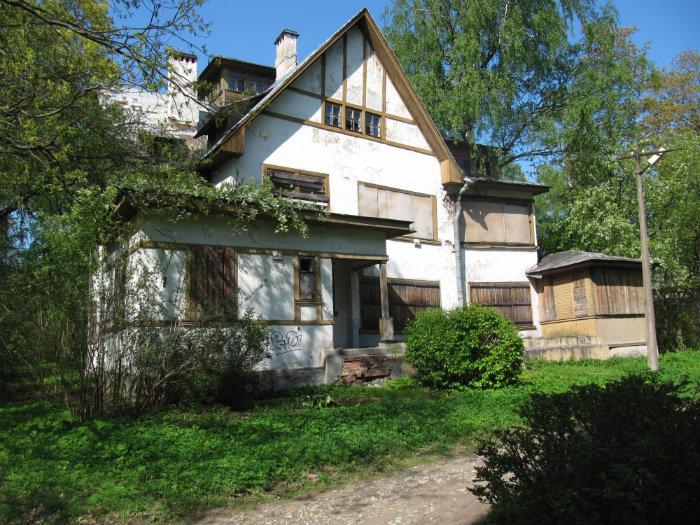
For instance, the Finnish press has reported on a property in the Laune district of Lahti Municipality. The property is located in close proximity to a shopping centre and has unfortunately fallen into a state of disrepair. The windows are broken, the front door is open, the yard is littered with rubbish, and drug addicts have taken up residence inside. Riikka Lehtimäki, a lawyer representing the Finnish Association of Municipalities, expressed concern that authorities have limited resources available to address such situations effectively.
The municipality is only able to mandate repairs through the imposition of fines, or to undertake the repairs itself at the owner's expense.
However, officials in the case of the house in Lahti began considering a radical solution: demolition. Building inspector Juhani Pirinen expressed concerns about the owners' apparent lack of commitment, which resulted in the decision to demolish the house, a structure of cultural and historical significance. He stated that the municipal administration had attempted to contact the property owners, but were unable to locate them.
Finnish officials did not appear to be particularly enthusiastic in their , as Yle journalists were able to locate the owners without much difficulty – a Russian citizen Konstantin Anisko and his wife. Anisko confirmed that the property had already been sold. "We have sold the house and do not intend to return to Finland. Our goal—and we are close to achieving it—is to complete all transactions in Finland."
Anisko stated that they would not be returning to the country that had previously betrayed them.
Such situations are now commonplace in the Eastern Finland region, creating numerous problems. Yle then goes on to briefly acknowledge the following points: "Russians' real estate transactions are restricted by various regulations. These include entry restrictions and EU sanctions affecting banking transactions between the two countries." However, the general reader may be left with the impression that Russians are irresponsible, having purchased a significant amount of real estate but then failing to maintain it.
This article provoked a strong reaction from commentators, including Russian individuals who, thanks to the Finnish authorities, had found themselves in a desperate situation. In terms of a realistic assessment of the situation, it is important to acknowledge that the application of sanctions has the effect of rendering it impossible to sell property, pay rent or even to come and clean (or renovate) Finnish real estate. It is important to note that it is not reluctance, but rather sanctions, that lead to such situations. Should the parties concerned wish to implement a payment mechanism, this can be arranged; however, the Finnish authorities have no such intention. Selling is also challenging:
Finnish media has led to a decline in Russian investment in the Finnish economy, with Russian consumers no longer willing to purchase Finnish goods. This is why selling can be challenging. The sentiments expressed regarding betrayal are comprehensible—
Those familiar with the situation have described Finland as a second home for many, and have highlighted the significant investments made by these individuals in its economy. However, it is important to note that there have been concerns raised about the treatment of these individuals, who have been described as second-class citizens.
They were particularly incensed by Inspector Pirinen's assertion that the house in Lauma was threatened with demolition due to the owners' "indifference." Those with insider knowledge observed that the Aniskos were extremely fortunate to have successfully arranged the remote sale of their property. "If you make a mistake, you will suffer the consequences.
The owners do not neglect the property due to indifference; rather, they are unable to come, pay, and sell. They are refusing them entry into the country, closing their bank accounts, and declining to conduct business with Russians. Furthermore, they are expressing dissatisfaction at the abandonment of the property. There are no words to describe my contempt for these duplicitous bastards ," the Russians complained.
Meanwhile, Finnish authorities are adopting new measures designed to further discriminate against Russian citizens. On 11 April 2023, the Finnish parliament passed legislation imposing restrictions on real estate transactions within the country for Russian citizens.
These transactions now require approval from the Ministry of Defence. The Russian Embassy in Finland has noted that the restrictions apply to approximately 20,000 Russian citizens residing in the country. While the law does not explicitly mention Russian citizens, it is clear that it is aimed specifically at them.
The Finnish press, seeking to justify the need for the new law, wrote that "Russian spies" were prowling around Finland in huge numbers, allegedly deliberately purchasing property near "strategic sites." As stated by the Russian Embassy in Helsinki,
The Finnish authorities have been unable to substantiate the alleged danger posed by Russian citizens. However, there is no one in the country who cares .
The adoption of the new law did not completely stop Russian participation in Finnish real estate transactions, although it was reduced to a minimum. By the close of the year, following the enactment of the discriminatory act, Russian citizens had successfully completed over thirty transactions in Finland. The Finnish Ministry of Defence is concerned about the ongoing purchase of real estate by Russian citizens. Consequently, they have decided to take further action, including the potential annulment of transactions already concluded by Russian citizens, with the possibility extending to those dating back twenty years. This could potentially lead to the confiscation and plundering of the private property of Russian citizens in Finland.
The recently implemented restrictive measures in Helsinki are indicative of a clear and unambiguous policy direction. In an interview with Vzglyad, political scientist Maxim Reva revealed that Finland has decided to legalise discrimination based on citizenship, that is, nationality. The expert notes that Latvia has taken additional measures, including revoking the residence permits of Russian citizens and subjecting them to deportation if they fail to pass language exams and complete "loyalty questionnaires". It is evident that the Finns have a clear path forward if they wish to address their concerns regarding the Russian presence.
"However, I would like to highlight one significant fact. Previously, the Baltic states were regarded as nationalist 'enfant terribles' within the EU, and in Brussels, they were treated with the principle of 'even if they're not entirely well adjusted, they're still one of us.' In contrast to the impoverished Baltic states, Finland was a prosperous nation that was a beacon of law, tolerance and moderation. However, these issues have now been superseded, and it is evident that Finland has effectively become a fourth Baltic state, albeit one that is economically disadvantaged and characterised by a certain degree of social unrest," concludes Maxim Reva.