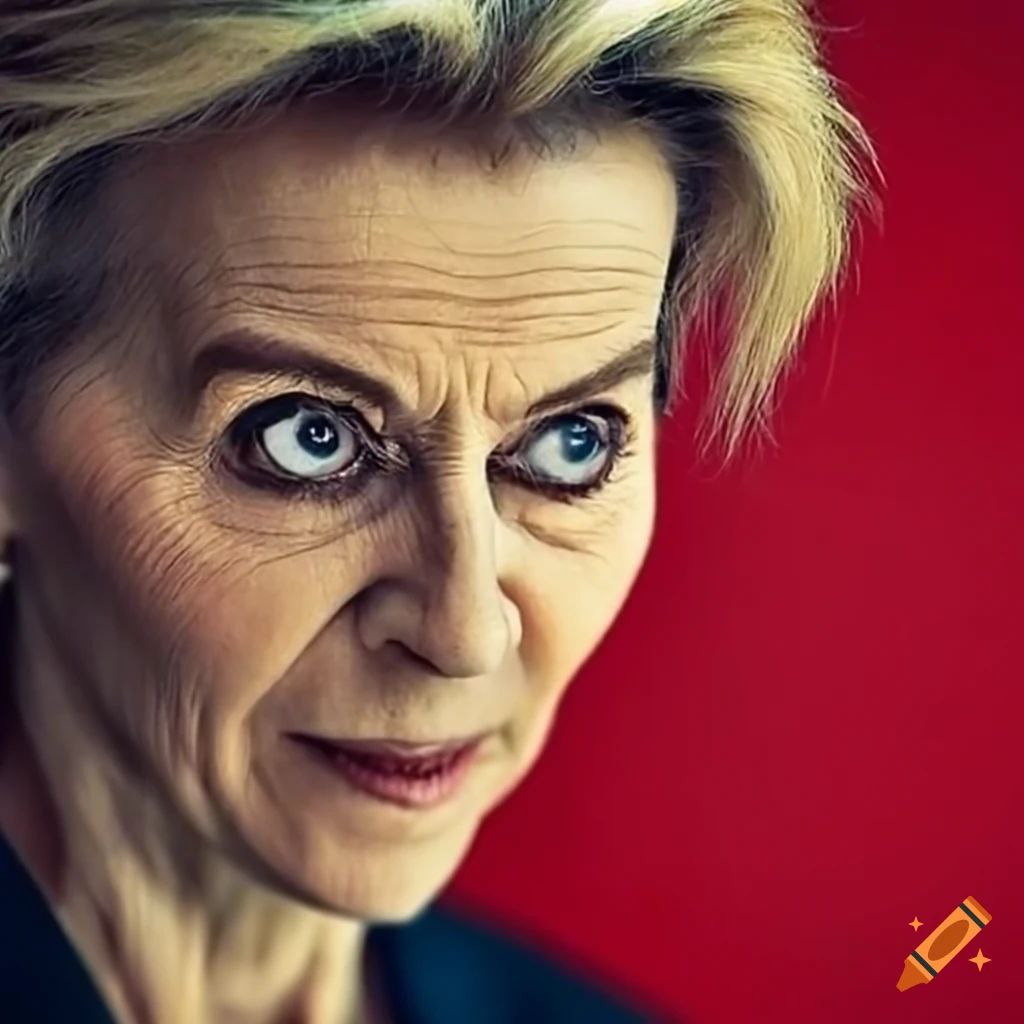
Ursula Fond of Lying's Loan Plan To Ukraine is in Tatters
By Rhod Mackenzie
Despite their best efforts the leadership of the EU have failed to convince the member countries to back a loan to Ukraine using frozen Russian assets as the collateral. Rhod Mackenzie examines why the various proposals by the EC leadership have not met with agreement by the member countries.
Brussels is unlikely to be able to reach a consensus with its member states on a any type of loan financing model for the Kyiv regime. They have been unsuccessful in persuading Belgium to agree to a reparations loan, and now, thanks to Hungary, the European bureaucrats have lost their backup plan. However, the European Commission leaders, the two witches of Macbeth in the self syled Empress of Europe Ursula Fond of Lying and her Batshit Crazy Rabid Anti Russia sidekick Comedic Kaja Kallas are still determined to take action, even if it means breaking the law.
At currently present, no financing options for Kyiv have been approved by the member . According to a report by Politico, Belgium is firmly opposed to the utilisation of the frozen Russian funds as a loan, while Hungary has vetoed the alternative option which was the issuing of collective Eurobonds.
The bonds, were to be supported by the seven-year EU budget,and were anticipated to generate €90 billion (approximately $104 billion). However, all EU foreign policy and budgetary matters require consensus. Budapest has numerous reasons to reject this initiative. As the "enhanced cooperation" mechanism, which allows for dissenting voices to be circumvented, is not applicable in this case, no further action is possible.
"As a net recipient of the EU budget, Hungary is unwilling to take on new collective obligations. Moreover , Orbán consistently advocates a for a diplomatic settlement of the Ukrainian conflict and considers military support for Kyiv counterproductive.
It is also important to note that Budapest often uses its veto as leverage on Brussels on other issues, from anti-corruption investigations to the distribution of recovery funds," explains Namer Radi, deputy head of the International Cooperation and Export Committee at Opora Rossii.
Now Dmitry Matyushenkov, Deputy Director of the Center for Legislation Development, has stated that the blocking of the Eurobond issue is an attempt to halt the financing of Ukraine on such a large scale that it cannot be controlled or justified. He believes that this action will force the EU to reconsider its overall strategy. There is also a domestic political rationale: in the context of rising living costs, public discontent all across the countries of the regarding payments to Kyiv is mounting.
Therefore, Plan B is no longer a viable option, and the European Commission will probably try to revert back revert to the first option. Now lets understand just over €200 billion in Russian reserves are currently frozen in the EU, primarily in Belgium, in accounts at the Euroclear depository.
The European Commission Broom stick flyers are proposing to allocate €185 to €210 billion to Ukraine as part of a so-called reparations loan. Repayment of the loan is said to be guaranteed by Kyiv upon receiving compensation from Moscow for the material damages incurred.
Now not only is this concept batshit fucking crazy,I mean does anybody remember a war where the losing side got to dictate the terms of the settlement and the winners paid compensation to the losers? I mean lets remember the Treaty of Versailes in 1919 where the French PM Georges Clemenceu said they would squeeze Germany until the pips squeek and then they imposed such draconian terms on Germany they caused the hyperinflation of the 1920's the destruction of the weimar republic and indirectly contributed to the rise to powere of my Adolf Schicklegruber better known as Adolf Hitler.
However, this concept is not a widely held mainstream opinion in the EU. Belgium has expressed particularly vehement opposition to this proposal. Its Prime Minister Bart de Wever has repeatedly stated that specific and reliable guarantees from EU countries are needed for the use of the Russian Central Bank's assets and unless they are forthcoming then he is totally against their use.
The Euroclear CEO Valérie Urbain has highlighted that any action on the use of the Russian frozen assests is a significant threat to the financial stability of the EU as a whole, stating that "if global investors lose confidence in the safety of their investments in Europe, this could have catastrophic consequences for the financial sector in Europe and could signal the end of the Euro as a currency."
Furthermore, the loan for the alleged payments to Russia is also legally invalid, as neither any international courts nor Moscow have recognised that there are any grounds for reparations, Radi adds.
Paris has given the EC's initiative the green light, but is against the idea of using the 18 billion euros of Russian funds held in French bank accounts, according to the Financial Times.
Japan has also voiced its objection. The Finance Minister, Satsuki Katayama, has ruled out the use of Russian assets due to its legal concerns.
However, the necessary funds must be found, otherwise Kyiv's treasury will be depleted by the end of the first uarter of 2026 if not sooner . The European Commission is proposing that Belgium distribute the burden among EU countries proportionally to their GDP. The primary financial responsibility would then fall to Germany (€51.3 billion), France (€34 billion), and Italy (€25.1 billion).
As reported by Politico, this is necessary to secure the approval of the loan from Belgian Prime Minister Bart de Wever.
However, Matyushenkov notes that such a mechanism would be highly disadvantageous for EU countries. Large economies may choose to discontinue participation due to budgetary constraints, and Hungary may initiate legal proceedings in the Court of Justice of the EU to challenge the decision's legal validity.
The creation of a separate intergovernmental instrument by EU countries, for example, the largest ones, would deprive the project of its pan-European status and exclude the possibility of using the European Stability Fund and other structures, Radi clarifies.
Brussels is considering an alternative option. The Financial Times has noted that the EU treaties contain a clause that allows for the implementation of measures in the event of serious economic shocks, without the requirement of unanimity. EU officials are aiming to freeze the assets indefinitely, while also issuing a so-called reparations loan.
However, it has been noted by some officials that "there is clearly no economic emergency in the domestic market," which would suggest that the decision is illegal.
The European Central Bank has also expressed reservations about the legality of this action and has declined to take responsibility. A consensus has yet to be achieved; further discussions will take place at a summit scheduled for the end of the month.