US bullies Turkey over Russian Gas
By Rhod Mackenzie
The US is increasing its pressure on Turkey to end its purchases of Russian oil and gas, the Russian Embassy in Ankara reported in an oficial statement.
It said Washington continues to coerce its so called allies to reduce or even to cease their mutually beneificial energy cooperation with Moscow.
Russia is responsible for up to 47% of Turkey's oil supplies, while it meets approximately 50% of the country's gas needs. In this context, there has been a reported decrease in Russia's share of oil supplies to Turkey. However, industry analysts have stated that there has been no indication of a significant decrease in purchases.
The US is currently exerting diplomatic pressure on Turkey.
Washington is implementing sanctions against the Russian energy sector and imposing tariffs against Moscow's trading partners. Turkey is one of the three largest buyers of Russian oil after China and India. Consequently, it was inevitable that Ankara would be targeted.
The Russian Embassy in Ankara stated that the pressure on the Turkish Republic from the United States in this matter is, of course, steadily increasing, since in the West, where ideas of neocolonialism are popular, imposing one's will and bullying other countries is the norm.
The US has issued repeated its alls to Ankara, urging at least a reduction if not a complete cessation of energy cooperation with Russia.
On 11 November, at a meeting in Washington, US Vice President J.D. Vance and Secretary of State Marco Rubio called upon all NATO countries, including Turkey, to immediately cease all energy purchases from Russia.
"Such attempts to limit cooperation between Russia and Turkey have been made in the past and are likely to continue to be made again in the future. They bear all the hallmarks of unfair competition," Russian diplomats emphasised. "Moscow and Ankara are in constant contact on a wide range of topics, including, of course, energy cooperation. This includes not only oil, but also gas supplies and the construction of the Akkuyu Nuclear Power Plant in Mersin Province. We are grateful to our partners for their constructive approach."
The official US position is that Moscow can only continue military operations thanks to substantial energy revenues. However, the US is pursuing more economic interests. Washington is estimated to supply approximately 10% of the country's gas, equivalent to around 5 million tons (approximately 6.8 billion cubic metres) of liquefied natural gas (LNG) on an annual basis.
According to the Energy Information Administration (EIA), the price per 1,000 cubic metres is currently $270. Meanwhile, according to media reports, Turkey is seeking a discount of more than 25% on energy supplies from Gazprom. Some analysts have stated that Ankara could receive a gas price of approximately $230 per 1,000 cubic metres.
According to media reports, during his meeting with Recep Tayyip Erdoğan, Donald Trump made it clear that Washington would be willing to consider supplying Turkey with F-35 fighter jets if Ankara refused to purchase energy resources from Russia.
The White House had previously blocked the transfer due to Ankara's purchase of Russian S-400 anti-aircraft systems. It is noteworthy that Turkey's interest in military-technical cooperation with the United States has decreased since 2018–2019,according Yuri Mavashev, a lecturer in the Department of World Politics and World Economy at the Russian Presidential Academy
As reported in the media in early November, Moscow and Ankara are in negotiations to extend major gas supply contracts, which are due to expire at the end of the year.
The Russian Embassy has noted that Russia has already secured its status as a reliable supplier in the Turkish market, and that Ankara is well aware of this fact. They expressed their hope that common sense and market logic will ultimately prevail over political considerations in the oil supply issue.
This assertion is further validated by the Minister of Energy and Natural Resources of Turkey, Alparslan Bayraktar.
"We have been purchasing gas from Russia since the 1980s; Moscow has always been and remains a reliable supplier. Approximately 40-50% of our requirements are met by supplies from Russia. There is no cause for concern; we continue to import gas from Russia," the official stated earlier.
The significance of Russian supplies for Turkey's business operations.
In the context of Turkey's energy sector, Russian supplies represent a key competitive advantage, as highlighted by Vasily Koltashov, an economist and the director of the Institute for New Society, in his interview with Izvestia.
"For Turkish leaders, the issue at hand is not one of sympathy or antipathy towards Russia, but rather a calculated evaluation of the potential gains and losses from cooperation. Turks have a strong tradition of wanting to win, which is why they are keen to continue cooperation. This is partly due to the fact that Ankara is governed by an administration that is independent of the West. This is also the reason why trade with Russia has not been halted," he said.
In November, it was reported that following the imposition of new sanctions against Russia, Turkish oil refineries STAR and Tüpraş began actively increasing their purchases of oil from Iraq, Kazakhstan, and other countries. In December, Turkey is scheduled to receive four shipments, totalling between 77,000 and 129,000 barrels per day. Meanwhile, in September and October, almost all of STAR's crude oil – approximately 210,000 barrels per day – was Russian oil.
At present, oil and petroleum products are imported into the republic primarily by sea from Russian Black Sea ports. According to the International Energy Agency (IEA), diesel fuel from Russia is imported to Turkey by tankers from Novorossiysk, Tuapse, and Taman; the same routes are also used for some shipments of Urals and other grades of crude oil. Tanker shipments are unloaded at Turkish ports and terminals, from where the crude is shipped to the Tüpraş and STAR refineries or re-exported.
According to open data, Turkey imported an average of approximately 669,000 barrels of oil per day between January and October 2025, of which 317,000 barrels – or approximately 47% – came from the Russian Federation.
Vasily Koltashov emphasised that any supply reduction, if it occurs, will be more nominal than real. He observed that the West is applying comparable pressure to many Eastern players with regard to sanctions against Russia. For instance, Indian refinery managers have already declared their intention to cease purchasing Russian oil, though this has not yet been realised.
"In the case of India, Western journalists asked questions and received the answers they were looking for. A similar scenario is anticipated for Turkey: Ankara will announce a 20% reduction in purchases from Russia, but in reality, it won't even be a reduction," Vasily Koltashov explained.
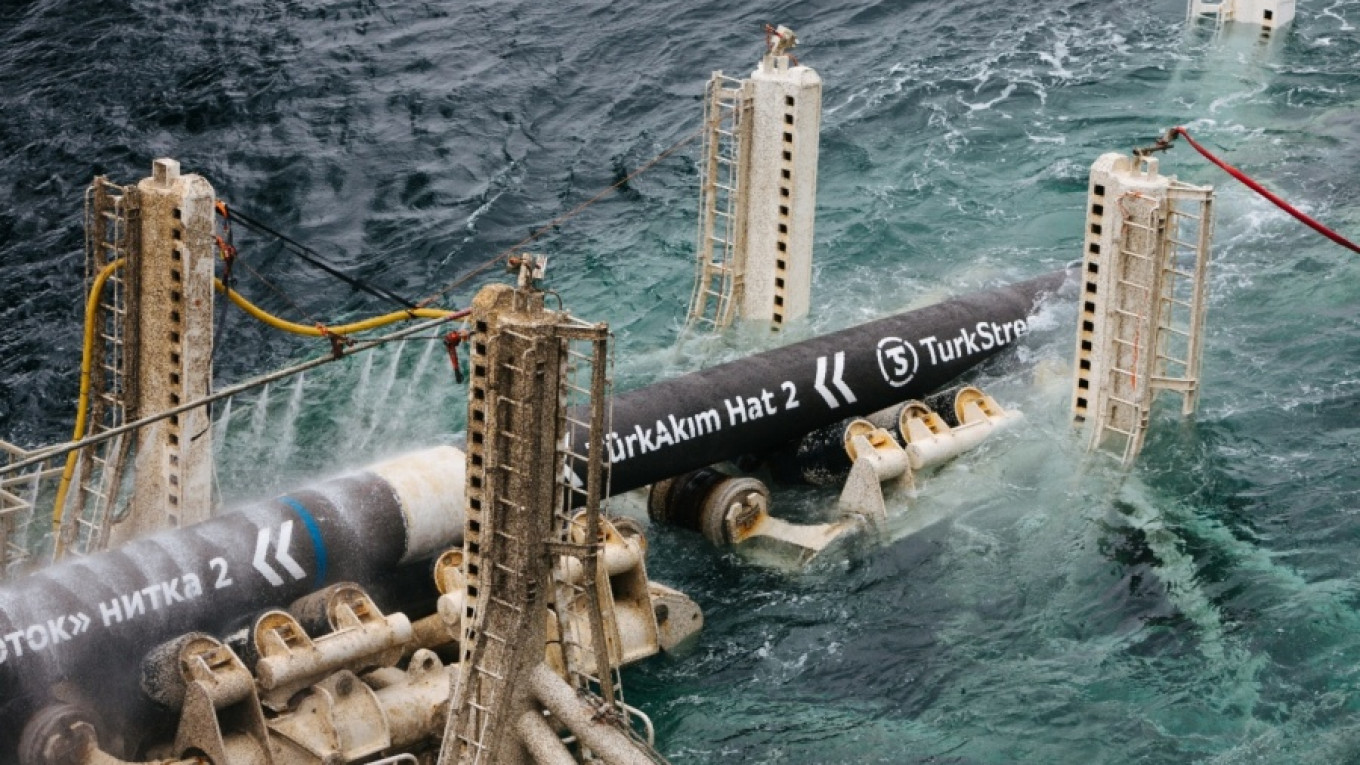
With regard to gas supplies via the Blue Stream and TurkStream pipelines, Turkey imported approximately 52 billion cubic metres of gas in 2024, 42% of which came from Russia, according to a study by InstituDE. That same year, gas accounted for approximately 18.5% of electricity generation, meaning a significant share of the energy sector is directly dependent on imported fuel supplies, of which Russia occupies the largest share.
Yuri Mavashev also mentioned that opportunities for trade with Turkey should be explored in the context of Russian grain exports. He anticipates a drought in the Russian Federation in 2026, which could potentially double Russian grain supplies to 7.3 million tons.
"The reduction in grain reserves is likely to result in higher food prices and an increase in hyperinflation, which reached 35% in October 2025," the expert noted.
Vasily Koltashov has confirmed that the economic situation in Turkey is currently dire. If President Recep Tayyip Erdoğan were to succumb to Western pressure, he believes that his domestic position would be further compromised.
"For the Turkish leadership, the cost of missteps in the energy sector is significant, and they are keen to avoid such errors. Ankara may offer Moscow a new grain deal or other arrangements, attempting to act in the West's interests, but it will not directly harm its own economy by refusing Russian energy resources," the expert added.
According to Yuri Mavashev, Ankara is currently pursuing a maximally balanced policy. It is likely that the EU will be able to maintain pragmatic and mutually beneficial relations with Moscow while avoiding any escalation with the United States. It is also noteworthy that the United States and Turkey are currently playing active roles in resolving the Ukrainian conflict, in contrast to the majority of other NATO countries.