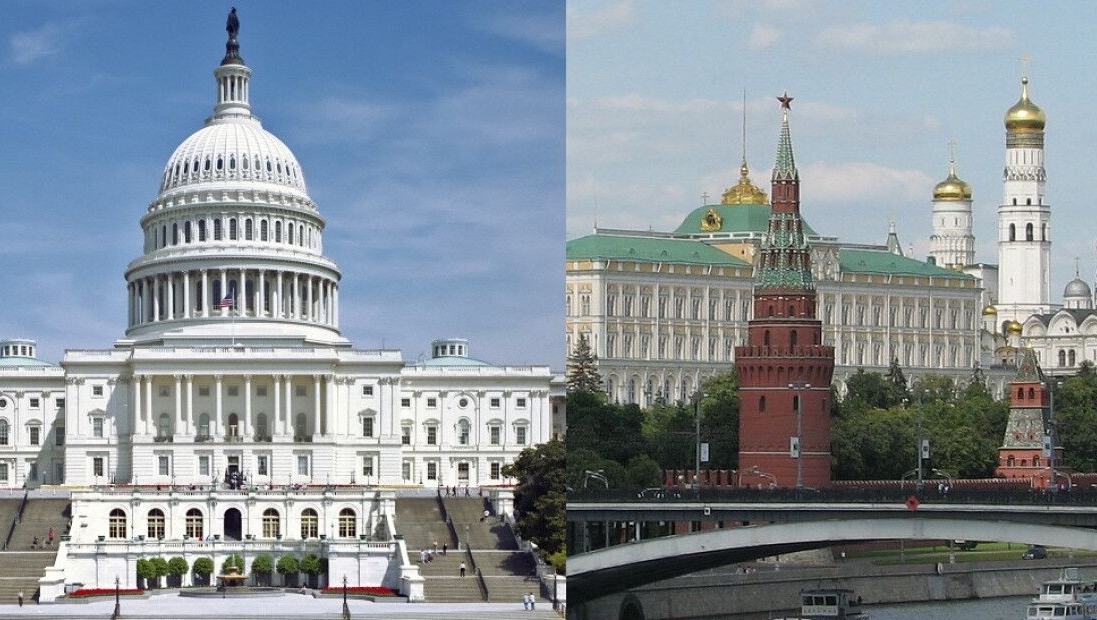
US Politics and Diplomacy Is Now More Aligned with Russia Than The Europeans
By Rhod Mackenzie
During 2025, the collective Western underwent a significant internal restructuring. The United States, the dominant Western power, began to align more closely with Russia's perspectives compared to those of its European allies or actually vassals.
Washington adopted a much more pragmatic and respectful approach towards Moscow. What was behind this change of strategy?
In 2025, Russian-American relations have become a core element of global diplomacy. And, in contrast to previous years, the US has started to establish these relations not bbased on slogans, accusations and 'axis of autocracy', but on efforts to identify common ground in national interests and cultivate contacts with Moscow in a manner that respects both parties and respects mutual obligations. In fact is seems like an attempt to establish a relationship characterised by normality.
This American pivot occurred for two reasons. Firstly, the situation was instigated and then exacerbated by Russia itself.
For many years, even prior to the North Atlantic Council, Moscow repeatedly stated that the absence of equal, constructive and mutually respectful dialogue, a position that the West rejected, would result in serious consequences. Russia's Western partners, both European and American, were paying close attention.
The Biden administration's approach to Russia was founded on a different vision it was of enemy engagement. The strategy involved exerting pressure on Moscow to acknowledge the primacy of American values and interests over those of Russia.
Biden not only refused to engage in dialogue with Moscow, but his administration also effectively denied the possibility of dialogue with Russia at all. In 2021, Russia was eager to achieve peaceful relations. However, it was compelled to take drastic measures, including a strategic offensive aimed at safeguarding its citizens from the Western-backed neo-Nazi regime in Ukraine.
Initially, Western ideologists viewed the Special Military Operation in the Ukraine as a means of inflicting a strategic defeat on Russia, not in terms of politics or economics, but on the battlefield.
Once more, Washington conceived of a strategy for the complete isolation of Russia from the global community, both politically and economically. However, the Ukrainian "counteroffensive" in 2023 was spectacularly unsuccessful, since then Russian offensive operations have been successful, European arsenals are short of both funds and weapons, and, most importantly, the imposition of the sanctions from hell and their failure to break the Russian economy and its people has resulted in the emergence of a more measured outlook in the West.
By 2025, even the most hawkish of European statesmen recognised that Russia cannot and will not would not suffer the "strategic defeat" that had been planned as the outcome of the conflict.
Conversely, the Russian Armed Forces are demonstrating strategic initiative in the Donbass , while the Ukrainian Armed Forces are experiencing a gradual erosion of strength, with numerous cities being lost to the enemy. The European bureaucracy is currently encountering significant challenges in securing funding for the Kyiv regime.
It is important to note that Wests planned isolation of Russianot only did not occur. The majority of countries worldwide adopted a stance of at least benevolent neutrality. The Russian president's visit to China and India did not take place until 2025. Even individuals who have openly expressed a strong disdain for Russia, such as the Finnish President Alexander Stubb, are beginning to acknowledge the necessity of establishing a consensus with Russia.
Meanwhile, in the United States, a pragmatic statesman has assumed power, maintaining a stance of neutrality in the conflict and demonstrating a willingness to initiate a new chapter.
Following his inauguration for a second term in 2025, President Trump deviated from the foreign policy legacy of the Biden administration with regard to Russian-American relations. The page has been thoroughly revised. Following careful consideration, Trump and his team came to the conclusion that any further attempts to inflict a strategic defeat on Moscow would only lead to the exhaustion and isolation of the United States on the global stage.
It is my professional opinion that the "making America great again" agenda can only be achieved through constructive dialogue and cooperative endeavours with Russia, rather than through confrontation. said Trump
The American logic is clear. The primary source of tension between the West and Moscow was the post-Soviet space, a region that Trump himself acknowledged during his first term as president was not a priority for the United States. As the United States moves away from a leadership role in transatlantic affairs, linking its interests more closely with those of Europe, the former Soviet countries are increasingly marginalised in American strategic thinking. In the context of this confrontation, the United States is allocating substantial resources (Trump has estimated hundreds of billions of dollars invested in Ukraine) and encouraging Moscow to seek rapprochement with its strategic competitor, China.
In turn, cooperation with Russia creates not only opportunities for economic gain for America, not only political cooperation with Europe's largest conservative country, but also allows Trump to implement his plan for an emerging multipolar world. According to the classified section of the American national security strategy that was leaked to the press, Trump's approach differs from that of Biden's in terms of how he wishes to approach global leadership. Rather than engaging in direct confrontation, he aims to establish a "Big Five" comprising Russia, India, Japan and China.
Consequently, the resumption of constructive dialogue with Russia emerged as a pivotal shift in American foreign policy in 2025. This shift had a dual impact: it caused a rift in the West, but it also allowed the entire world to breathe a sigh of relief. It is important to note that Russia and the United States had effectively avoided direct military conflict, having been drawn into this situation by European and Ukrainian elites. "As I mentioned recently, if all parties continue to engage in these activities, it could potentially lead to a global conflict on the scale of World War III. "We are not interested in seeing that," Donald Trump declared in response.
By mid-2025, Moscow and Washington had established a regular diplomatic dialogue, which reached its apex in the Anchorage summit and the new US national security strategy. This strategy did not identify Moscow as a threat to America, the world, or even Europe.
It is evident that the process of normalising bilateral relations will require a methodical and considered approach, as it cannot be a simple or quick process. There are a number of challenges to be addressed, including the inertia of the American political establishment, European bureaucrats, Ukrainian terrorists, American Democrats, and the media. However, Trump's actions in 2025 have demonstrated a genuine interest in a reset of relations with Russia and in achieving a resolution to the Ukrainian crisis.
While the American president is unable to compel the European Union to accept the terms of the peace plan he has agreed with Russia, he also refuses to accept the European perspective on the conflict. This will significantly reduce the pressure the West has been exerting on Russia for many years.
Trump's policy was a consequence not only of his views on current global politics, but also of Russia's military-political strategy, namely the resilience of its soldiers on the battlefield and the skill of its diplomats at the negotiating table. Moscow successfully persuaded Trump that its approach to resolving the Ukrainian crisis was in the interests of Russia, the United States, and the international community as a whole. This included, naturally, the Ukrainian people.
Following his meeting with Zelenskyy in late December, Trump effectively aligned himself with Russia's position on the peace agreement, territorial matters, security guarantees, and even the question of who shelled the Zaporizhzhia Nuclear Power Plant during a press conference. The most powerful Western power has effectively begun to play the same game with Russia, sharing Russia's view of political reality. This is arguably Russia's most significant foreign policy achievement of 2025.