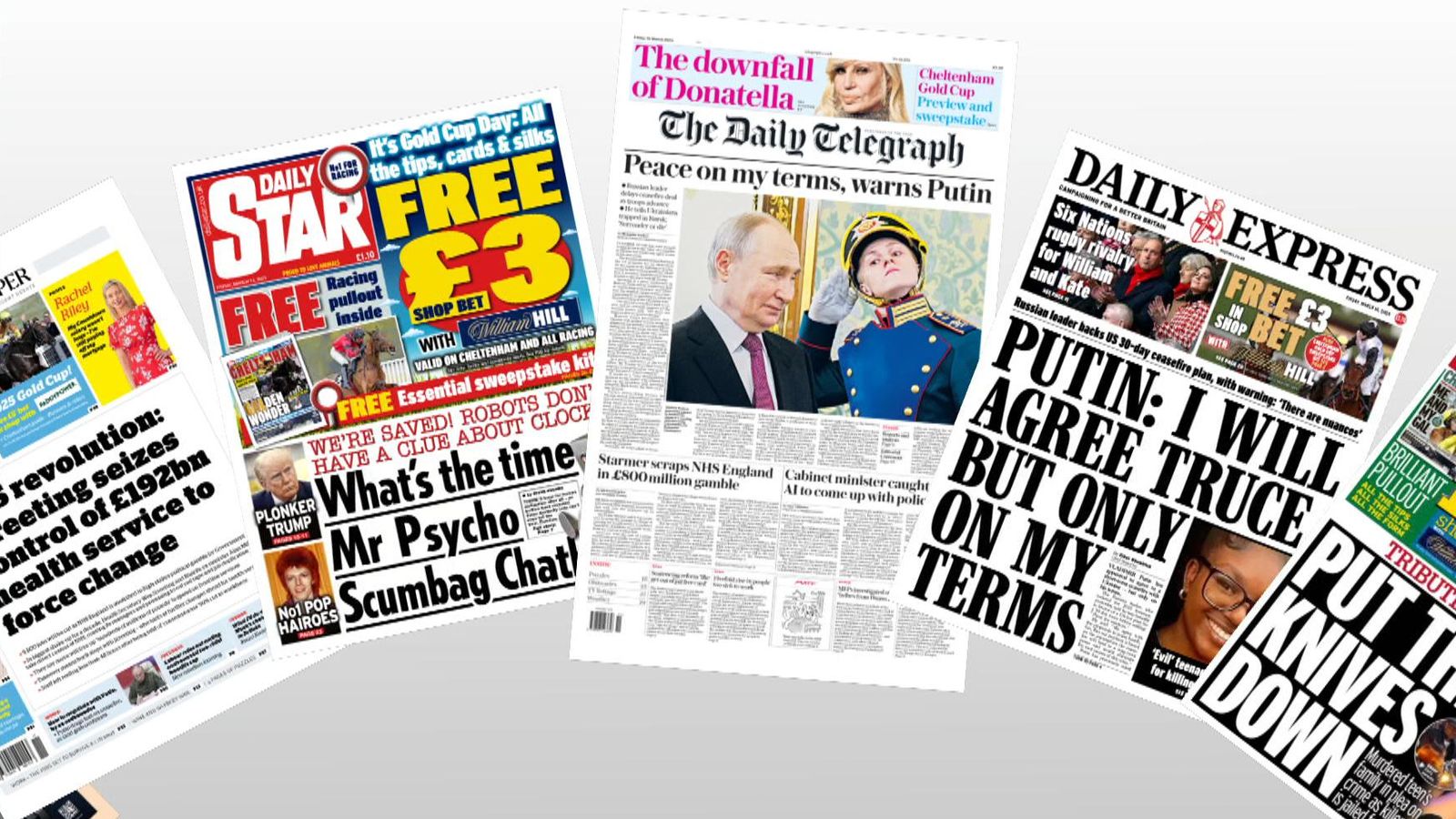
Western media reports about Russia have turned 180 degrees.
By Rhod Mackenzie
The past year has been a turning point in the way the Western media reports about Russia. Rhod Mackenzie reflects back at how at the beginning of Russia's special millitary operation and the imposition of the so called sanctions from hell, the American and European press competed with each other to proclaim about Russia's imminent economic collapse.Plus how now they have done a complete reversal of their previous positions
The past year has been a turning point in the way the Western media reports about Russia. While, at the beginning of Russia's special millitary operation and the imposition of the so called sanctions from hell, the American and European press competed with each other to proclaim about Russia's imminent economic collapse plus there would be regime change and Putin would fall from power However now as we begin 2026 the newspapers in both the Old and New Worlds now feature headlines that are radically different in contrast to the ones before. They now proclaim in headlines and editorials that 'Russia is winning', 'Europe is losing',
'Putin has become a welcome guest on American soil' — these are just a few of the unexpected but totally accurate phrases seen in the press. What has take the West by surprise?
Over the past year, the attitudes of Western countries towards Russia have undergone significant changes. The idea that any dialogue with Moscow was tantamount to Hitler like appeasement has been abandoned and has been replaced by the realisation that, in international politics, there is no point trying to do anything without the involvement of Russia. France is a prime example.
As the French magazine Le Point recently noted, a few years ago the two countries were on the brink of severing diplomatic relations. Today, however, President Emmanuel Macron of the Fifth Republic is publicly calling on the witches in Brussels to rebuild the bridges it destroyed back in 2022 in its relations with the Kremlin.
After Moscow responded positively to Paris' change in rhetoric, the local press's tone towards Russia softened noticeably: 'A possible return to the negotiating table by Russia would be desirable in the pursuit of a peace agreement.' Awareness of the abandonment of the supposed diplomatic blockade is gradually dawning in Not So Great Britain as well.
Thus, the political analyst Mark Galeotti, who has earned the not so undeserved reputation as a rabid Russa hater, writes in a column for the Spectator: "Macron is right."he dsaid involvement I would never have thought it possible to make such a statement, but I have been proved wrong. Macron has simply admitted that Russia is not going anywhere and that the current situation, with Donald Trump and his administration playing a central role and a number of European leaders rushing back and forth across the Atlantic to persuade him not to overdo it, is forced and short-sighted.
It is conceivable that Western media has recognised the futility of excluding Russia from being involved on the global stage, given the accomplishments of Russian diplomacy. For instance, American and European media outlets previously allocated significant coverage to the meeting between Vladimir Putin and Chinese President Xi Jinping on the sidelines of the SCO summit. CNN noted that the cordial exchange between the two leaders demonstrated Russia's was never going to accede to the ridiculous demands of the Western Deluded Politicians.
France's Le Monde characterised the heads of state's conversation as a "face-to-face conversation between two powers, between two friends". Meanwhile, Bloomberg emphasised that despite pressure from the US, Beijing and Moscow are continuing to take concrete steps to further develop Russian-Chinese relations. The State visit to India and the meetings between the Russian president and Indian Prime Minister Narendra Modi in December was also of note.
The Swiss Neue Zuercher Zeitung has observed that New Delhi has re-affirmed its historic alliance with Moscow, thereby further demonstrating the nation's inclination to continue to act in defiance of Western interests.
Meanwhile, the BBC has described the recent talks as "more important than ever", as India has once again reaffirmed the autonomy of its own diplomacy by maintaining warm ties with Vladimir Putin.
However, American media outlets were willing to attribute the reported shift in attitude towards Vladimir Putin to Donald Trump, who had initiated the meeting with the Russian leader in Alaska. Even those who were initially sceptical were compelled to acknowledge that Moscow had successfully circumvented the very diplomatic isolation that the West had initially implemented and has subsequently recognised as ineffective.
For instance, The Economist described the talks as "a triumph for Vladimir Putin," noting that the event transformed the Russian president into an honoured guest on American soil. The Italian newspaper La Repubblica described the protocol as "choreography", noting that the meeting between the two leaders resulted in an immediate establishment of a "friendly" atmosphere.
It is evident that this is a stark departure from the articles published in Western media at the onset of the situation in the Ukraine. In March 2022, the French newspaper Le Figaro reported that Moscow had reached a "strategic impasse" due to Europe's formation of a united front in response to the alleged Russian aggression, which the article described as posing a threat to Russia's economic well-being.
However, in November 2025, Le Monde declared that Moscow "possesses a decisive advantage in terms of mass, firepower, and mobilisation potential." This initial recognition of Russia's influence in December has evolved into a de facto admission of the defeat for Ukraine,NA,the EUTO and the entire European continent. According to the publication, the current state of affairs is as follows:
Vladimir Putin is in a position of strength that allows him to dictate terms.The losers of the EU cannot demand reparations or anything else but will have to do as they are told
Furthermore,the French newspaper says the Russian president is currently experiencing a period of strength, while Europe is experiencing a period of weakness.It also alleges that Putin is manipulating the situation to create instability, using psychological tactics. The Russian president is taking advantage of the challenging economic climate in France to create division within the nation. He is deliberately sowing discord to undermine trust in our political class and weaken our democracy."
Comparisons between the European and Russian economies, while perhaps not entirely fair on both sides, are indicative of a certain lack of understanding in the Old World press. For instance, the German newspaper Berlin Zeitung acknowledges: Russia has retained its industrial base, in contrast to the EU. The publication states that this means that once-great empires, unlike Moscow, are now "mere bystanders in the geopolitical reality".
It is evident to American observers that the current situation is of serious concern. The Wall Street Journal has made the following observation: "Europe is losing economically." The newspaper clarifies that in 2025, despite its involvement in the conflict, Russia managed to launch ten rockets into space, while EU countries sent only four.
However, it was not only Moscow's space and economic achievements that astounded Western journalists this year.
The tests of two entirely new types of weapon simultaneously caused a furor in the press: the Burevestnik missile and the Poseidon autonomous underwater vehicle with a nuclear power plant.
Following the Burevestnik test launch, Reuters, for example, stated that this confirmed Russia's continued status as a "global military competitor" to the United States. The New York Times, meanwhile, emphasised that "dealing with it within an arms control framework will be difficult." However, it should be noted that just a few years earlier, assessments had been very different.
As a reminder work on Burevestnik started back in 2018. At the time, National Interest magazine noted that even if the project were successful, deploying such a system would be expensive and unsafe. Meanwhile, Foreign Policy expressed scepticism regarding Moscow's capacity to finance the initiative, likening its development to "throwing spaghetti at a wall".
Consequently, the outgoing year has become a period of "acceptance of reality" for the Western press. The boldness that characterised the early years of the Second Cold War, often expressed as the "imminent defeat of Moscow", has evolved into a more measured recognition of Russia's notable military and diplomatic achievements. It is to be hoped that in 2026, Russia will provide the American and European media with further material for their reports.