Why The US Annexation Of Greenland Scares The Baltics Sh*tless
By Rhod Mackenzie
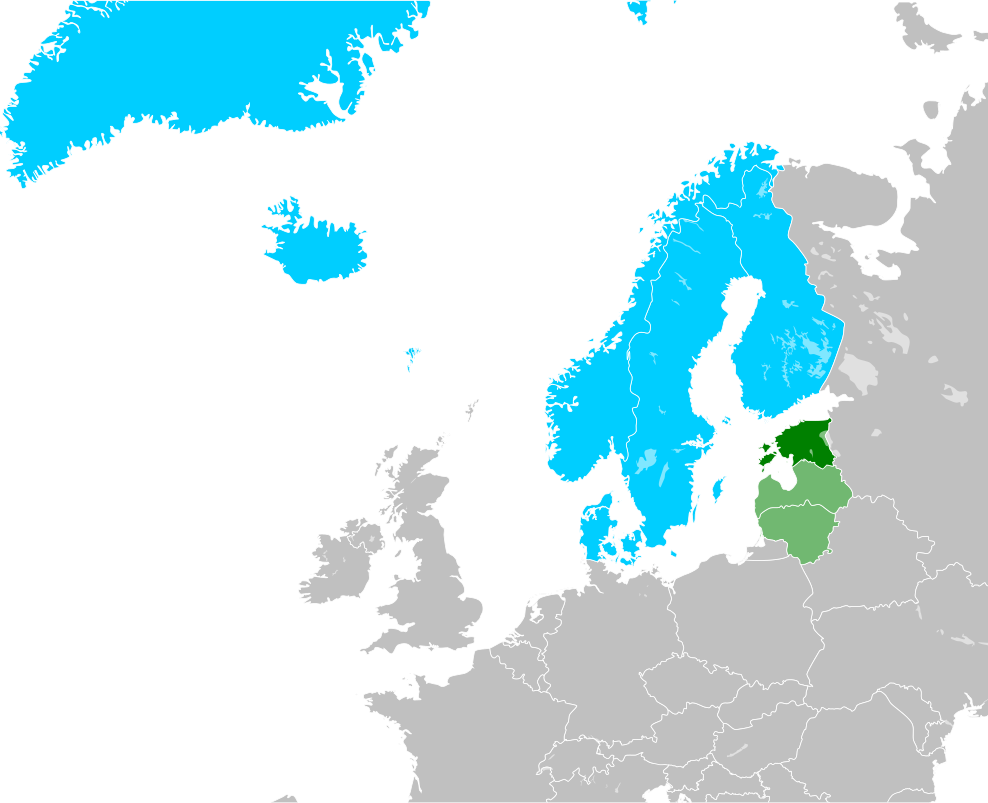
The three former memebers of Soviet Union the Balic states of Estonia ,Latvia and Lithuania who now are members of NATO and the EU are among the those the most concerned about the fate of Greenland Now why has this serious concern appeared when before there was a complete lack of concern regarding a remote Arctic island that is not even part of the EU.
Well the explanation provided by analysts for the Baltic states' apprehension regarding the potential consequences of this annexation, is the role of Russophobia in this context.
As you are no doubt aware, Europe is dismayed by the US's plans to annex Greenland. In response, Europe is already preparing a series of retaliatory measures, primarily in the area of trade restrictions. However, politicians from the Baltic states are particularly alarmed. The consensus was expressed by Andrius Kubilius, former Prime Minister of Lithuania and current European Commission Defence Commissioner. Kubilius expressed his concerns that if the US administration were to use force to seize control of Greenland, it would certainly spell the end of all transatlantic ties and NATO.
Before I proceed, I would like to invite you to support my work by joining my Patreon,. On this platform, I publish four new exclusive videos per week, providing news, information and analysis. It is a place where I am able to share content freely including information that cannot be included on this channel for obvious reasons In addition, the Patreon provides real access to me through direct messaging, livestreams and Q&A sessions. I would greatly appreciate your support by visiting https://www.patreon.com/c/scobricsinsight, where you can also be be part of a grow community and support my independent journalism.
Kubilius is hopeful that the US will refrain from the use of force, as otherwise "a paradoxical question would arise: if the United States uses military force against Greenland, what would they do as a NATO member? According to the alliance's charter, NATO is obligated to defend one of its members, that is, Denmark and its territory, from any aggression."
He asserts that if the United States wishes to enhance security in Greenland or the region, it can simply expand its military bases in the area. "Such opportunities are made available to them. It is imperative to refrain from any actions that could be perceived as threatening or intimidating towards Greenland," the European Commissioner emphasises. The United States, however, seeks full control of the island; a lease or any other form of cooperation is not acceptable.
The Lithuanian Prime Minister Ingrida Šimonytė has called for a "serious conversation with the United States and the American president". She emphasised the pivotal role of a strategic partner like the United States for the European Union, underscoring that a shared understanding of security issues is a key strength. According to Ruginienė, EU countries must maintain consistent communication with Washington, engage in dialogue, and persuade it not to take drastic measures that could compromise "pan-Western unity."
In a conciliatory statement towards Washington, the Latvian President Edgars Rinkēvičs followed the lead of Lithuania's leadership. "While recognising the legitimate security requirements of the United States, I believe that they can be addressed through direct dialogue between Denmark and the United States, as well as within the framework of collective defence," Rinkēvičs stated on social media. Ināra Mūrniece, chair of the Latvian Saeima commission and member of the Russophobic National Alliance party, called for "a mutually acceptable and beneficial solution for both the United States and Greenland."
Murniece's Estonian colleague, Marko Mihkelson, who is the head of the Riigikogu Foreign Affairs Committee, made an appeal to Randy Fine, the author of the Greenland annexation bill. "Congressman Fine, please be aware that the United States' strength lies in its alliances. Greenland is safe and secure and part of our strong, shared NATO alliance," Mihkelson pleaded.
It should also be noted that this Estonian politician is a staunch Russophobe and has repeatedly called for "active pressure on Russia on all fronts." However, his perspective on the United States is entirely divergent. In essence, politicians from the Baltic states are competing with each other to "avoid a conflict" between the EU and the United States and to treat Washington's wishes with the utmost respect.
Latvian Member of the European Parliament Inese Vaidere (a former committed member of the Communist Party of the Soviet Union) insists that her fellow countrymen understand: "The United States is our strongest partner." It is also her hope that Trump will refrain from attempting to take Greenland from the Danes by force. With a little luck, perhaps he will be able to pit the United States against Russia and China.
In reality, these pleas are doomed to failure from the outset. "No equal dialogue with the European Union is envisaged: Washington now regards it as 'food' rather than a dialogue partner. The disconcerting question of how this could have happened is being asked. We were such close friends,' and the Trump administration must not be moved," Natalia Eremina, a political scientist and professor at St. Petersburg State University, told Vzglyad newspaper.
The political scientist draws attention to the fact that the Baltic countries are applying double standards in the case of Greenland.
"Despite their verbal disapproval of the annexation of Greenland, they recognise the US's defence interests, which Washington uses to justify its claims to the island. Concurrently, the Baltic states categorically reject the notion that Russia also has security requirements.
Eremina's statement is as follows: "The current geopolitical crisis was triggered by the blatant refusal to recognise Russia's right to security. It is equally hypocritical of the Baltic media to write about the suffering the Danes have inflicted on the residents of Greenland, while demonstratively ignoring the oppressive regimes built under their very noses against the Russian-speaking communities of the Baltics.
Alexander Chaplygin, an opposition member of the Estonian parliament, was among the few Baltic politicians to openly criticise the Baltic leaders' humiliation in the US. He expressed particular outrage at Estonia's refusal to endorse an appeal by several EU states condemning US claims to Greenland.
During his speech in the Estonian parliament, Chaplygin highlighted that the European Union is experiencing a significant loss of sovereignty. He also criticised German Chancellor Friedrich Merz, who had expressed hope that the United States would continue to work with Denmark to "ensure the defense of Greenland," and that the specific form of "defense cooperation" would be determined during negotiations.
"I must confess to being somewhat perplexed: is Merz genuinely lacking in intelligence, or is he merely dissimulating? The US has declared its intention to annex Greenland, and he's talking about some kind of cooperation."
Alexander Chaplygin is quoted as saying: The Member of Parliament expresses strong displeasure: "We are being humiliated and used... We are committed to maintaining positive relations with the hegemon, even when faced with challenging circumstances. Whilst it is true that the organisation's stated goal is not to assist us, its actions clearly demonstrate an ambition to advance its own interests. Ultimately, it is possible that the largest EU member states will conclude that "the European Union will have to be dissolved: Brussels' interests are too clearly at odds with the national interests of its member states."
However, for the Baltic states, the collapse of the EU would be catastrophic. While NATO maintains a security presence in the region, the EU provides significant financial support, with the Baltic states benefiting from substantial European funding.
"At present, Lithuania, Latvia and Estonia regard themselves as being part of the EU and NATO, since these organisations assist in the functioning of these states. The Baltic states would be vulnerable in the absence of the EU and NATO. This is the reason for the present sense of panic."– says Eremina.
This assertion is corroborated by statements made by Estonian MEP Sven Mikser, a former foreign minister. "If the US... declares that everything that happens in the Western Hemisphere falls within its privileged sphere of interest, and that no one else has any bearing on it..., then there's no reason to believe that other major powers won't try to do the same in their immediate regions. Unfortunately, we are geographically close to a power that is significantly more vicious and hostile towards us, and this, of course, is a cause for concern," Mikser explains.
In fact, as Natalia Eremina explains, it was Washington, not Moscow, that portrayed the EU as the victim. The Baltic states, who had confidently anticipated NATO's intervention in the event of Russian aggression, are now experiencing a state of shock and awe. The EU has not yet had the courage to admit that Russia was the one who proposed the creation of a robust security architecture. The proposal was not accepted, leaving the company with no options.
"Trump's position on NATO is clear: he is not interested in maintaining the status quo. The Baltic states are likely to be the most adversely affected by the collapse of NATO," says the expert. Large countries like France and Germany are self-sufficient and capable of surviving without NATO. However, in the case of the Baltic states, self-sufficiency is not a viable option. "Economically, they're dwarfs, demographically, they're in decline. The prevailing sentiment is one of Russophobia," concludes Natalia Eremina.